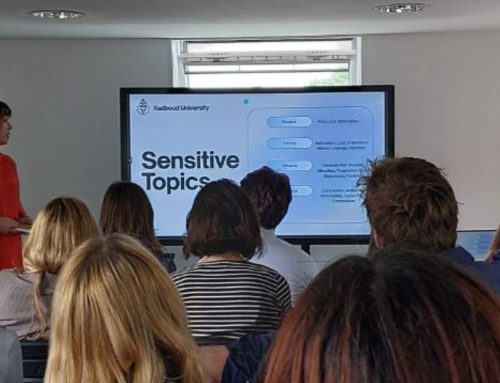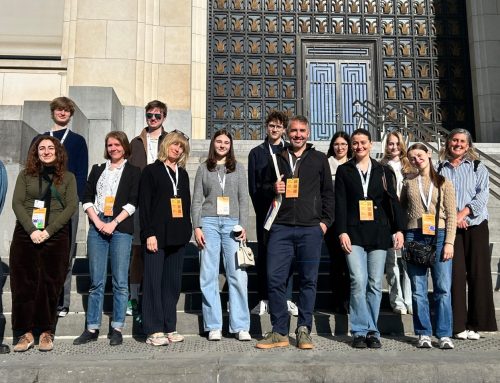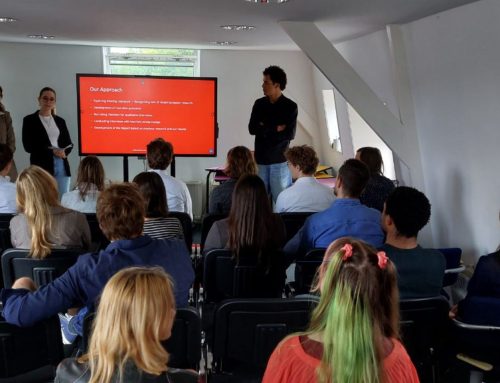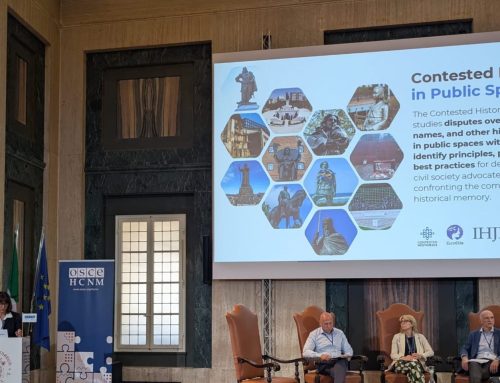
In our diverse European society, we cannot escape history when seeking to understand the present in our search for a common future. EuroClio has been working on opening up spaces to challenge dominant national narratives and to engage with the complexity, multiplicity and transnationality of European history and history teaching. We believe this is a necessary first step that allows and supports educators and their students to discover common positions or overcome divisions while acknowledging existing differences.
We believe that supporting transnational exchange and peer learning between history educators from the bottom up increases the probability that initiatives also answer educators’ real needs on the ground. At the same time, we hope it will lead to more transnational cooperation between history educators and EuroClio’s member associations to enhance history education in Europe.
For those members interested in the call, there was an information session on June 3 from 17.00 to 18.00 CET (if you would like to know how this translates to your local time, please visit the following link). If you were not able to join and would like to see the recording, please write to secretariat@euroclio.eu
What are we looking for?
With this call, we aim to support EuroClio Full Members in developing or strengthening the transnational dimension of their capacity-building activities, such as workshops, summer schools, seminars, and conferences.
In 2026, we offer two types of Grants:
- Cooperation Grants: This support to EuroClio Full Member organisations based in the European Union is given to facilitate member-to-member activities. In total, 6 cooperation grants will be awarded in the form of a lump sum of 6.000 €. This lump sum can be used to cover costs for accommodation, transportation, meals, translation, interpretation and other costs associated with the implementation of the activity, such as printing and renting a venue. The activities must take place before October 31, and at least two contributions to the programme must be made by facilitators from another country. All activities must take place in an EU country. Grantees of Cooperation Grants will be asked to submit as deliverables: an in-depth article focused on a topic of choice linked to the topic of the activity organised, and an overview of the outreach and communication activities organised to further disseminate the activities that have taken place.
- Dissemination Grants: This support to EuroClio Full Member organisations based in the European Union is given to either work with EuroClio to create educational resources from an already selected pool, ready to use in their context, or to join the train-the-trainer event taking place in The Hague from October 23 to 24. Applicants must specify which of the two activities they wish to participate in. In total, 4 financial support grants will be awarded as lump-sum payments of 3.000 €. Dissemination Grants grantees will be asked to submit, as deliverables, either a local adaptation of an existing EuroClio resource or one based on one of the methodologies presented at the Train the Trainer event.
In addition, grantees will be asked to submit a written article based on the activity implemented, which will be used to showcase the grantees’ work and encourage other member associations to apply for regranting funding. This article can take different formats, such as an interview with participants or an analysis of the activity’s content. As photos from the event may be used for dissemination, members are required to follow EuroClio’s GDPR policy and request permission from their participants to appear in promotional materials.
Please note that members can be recipients of only one grant.
All activities should be finalised by November 30, 2026, to ensure there is enough time for the reporting and submission of deliverables.
The payment of the grant will be made in two instalments: the first payment will consist of 60% of the grant and will be paid before the implementation of the activity; the second payment will consist of the remaining 40% of the grant and will be paid upon receipt and approval of the deliverables.
Who can participate?
EuroClio Full Members based in the European Union who plan to organise activities in the European Union.
What should the application include?
The application should be sent to secretariat@euroclio.eu and follow the following template. The required information is:
- Type of Grant: [Cooperation Grant] or [Dissemination Grant]
- Name of the Activity:
- Date of submission:
- Coordinator contact:
- EuroClio Members Involved:
- Summary of the activity
- Motivation to apply
- Background and Objectives of the activity
- Proposed Programme
- Budget
- Tentative outline for the deliverable
- Tentative plan for the outreach and communication activities
Timeframe for submission and selection
The call will launch on May 26, 2026, and we will accept applications on a rolling basis until September 30, 2026, or until all Grants have been awarded.
Each month, the call will be updated with the number of grants available per strand.
When selecting the dates for the events to be organised, please keep in mind that all applications will be reviewed within two weeks of submission. Thus, we advise you to submit your application at least a month before your intended start date.
On what basis will we make the selection?
Evaluation criteria for Cooperation Grants:
- Motivation of the applicant
- Quality of the programme
- Inclusion of another member organisation
- Two contributors come from different countries
- A section on EuroClio in the programme
- Multiplying effect (synergies with other initiatives, potential for follow-up and future cross-border cooperations)
- Expected impact of the proposal (legacy of the event, use of the resources).
- Relevance of the proposal to the objectives of the call
- Budget
Evaluation criteria for Dissemination Grants:
- Motivation of the applicant
- Quality of the programme
- Inclusion of already existing EuroClio resources
- Expected impact of the proposal (legacy of the event, use of the resources)
- Relevance of the proposal to the objectives of the call
- Budget
The weight of the selection criteria is as follows:
- Motivation: 40%
- Background and Objectives: 20%
- Programme and expected deliverables: 30 %
- Budget: 10 %
The review committee will document their decision and provide feedback if requested by applicants who have not been selected. If the rejection is not based on eligibility criteria, applicants may resubmit once within a week of receiving feedback from the committee.
How many grants are available?
As of July 14, 2o26, the following number of grants are available:
- Cooperation Grants: 4 grants available
- Dissemination Grants: 3 grants available
Funded by the European Union. Views and opinions expressed are, however, those of the author(s) only and do not necessarily reflect those of the European Union or the European Education and Culture Executive Agency (EACEA). Neither the European Union nor EACEA can be held responsible for them.