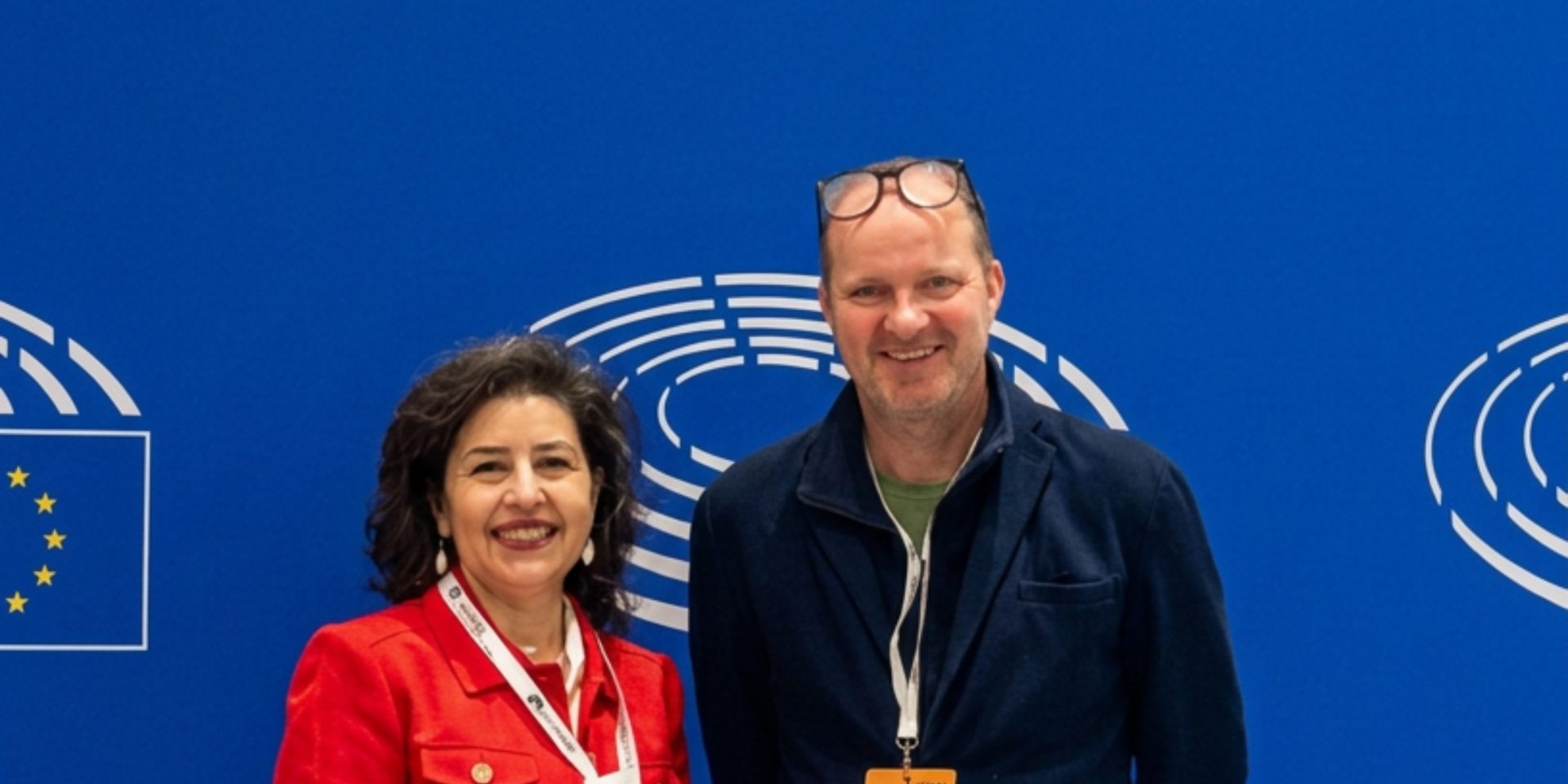
This article is written by Bjorn Wansink and Nayla Hamadeh.
Introduction:
Bjorn: In 2019, I had the opportunity to visit Nayla Hamadeh in Beirut together with Bojana Dujkovic-Blagojevic from Bosnia and Herzegovina. We collaborated on a EuroClio project focused on developing teacher training for history education in times of crisis.
I was deeply impressed by the warm hospitality and friendliness of the Lebanese people, as well as by the country’s rich culture and remarkable food traditions. At the same time, Lebanon is also a country marked by contrasts and conflict. Teaching history there is highly challenging and often subject to political and social pressures.
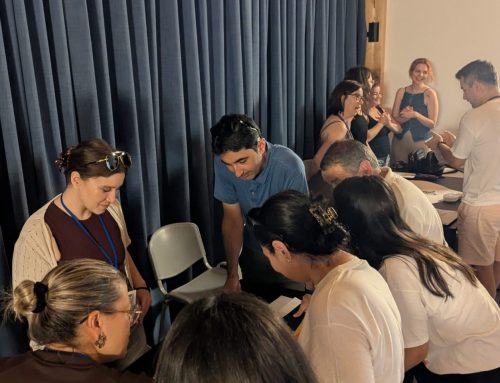
Lebanon has endured multiple crises over the years, and the recent continuation of the war that began in March 2026 is only the latest example. At the last EuroClio 2026 conference, I had the honour of leading a workshop together with Nayla on the theme of hope in history education.
In this interview, I explore with Nayla the complexities of teaching history in Lebanon. Above all, it is a conversation about the courage, resilience, and dedication of Lebanese history teachers and of Nayla herself.
The interview:
Bjorn: Nayla, what inspired you to become a history teacher and later help found the Lebanese History Association?
Nayla: To begin with, I grew up during a time of war. It was a complex and difficult conflict, and from an early age I wanted to understand what was happening around me. I wanted to understand why our country was in the situation it was in.
At the same time, both of my parents were deeply interested in history. My mother taught history for a period, and my father is especially knowledgeable about the subject. He has written several articles on history, particularly on the history of our country and our region.
I began teaching during a period of relative stability. The war had officially ended in 1990, and I started teaching in 1998. At that time, there was a sense of hope. We felt that we had finally turned the page. A few years later, things began to change, and new forms of violence started to emerge. They threatened not only my life, but also the lives of my children and the society around me.
Bjorn: What should European teachers understand about the context of Lebanon?
Nayla: I think we need to begin with a very simple idea: in Lebanon, history is not just subject matter. It is, in many ways, a political minefield. Teaching history often feels like walking on eggshells because almost every topic—whether recent or distant—is sensitive and contested.
Lebanon is a pluralistic society built on a sectarian power-sharing system. There are 19 officially recognised religious sects, and the political system itself is structured around balancing power among them. Most of these communities also run their own schools, which is made possible by the constitution guaranteeing religious groups the right to establish educational institutions.
Bjorn: What does this mean for history education?
Nayla: With these separate school systems come not only different educational structures, but also different narratives of the past. Students often grow up learning distinct, and sometimes conflicting, versions of historical events depending on their school and community.
In Lebanon, more than 60–70% of students attend private schools. While all schools are expected to follow the national curriculum, especially in exam years, in practice there can be significant variation in how history is taught. As a result, children may learn different “versions” of the same events.
For example, as a teacher trainer, I once spoke with a part-time teacher who explained that he taught one version of history in one school and a different version in another. When I asked him how he could reconcile this, he simply said, “This threatens my life; I have to do it this way.” It was shocking to hear, of course, though this is not meant to generalize; it nonetheless reveals something important about the context in Lebanon.
Bjorn: What do we need to know about the history curriculum?
Nayla: Teachers in Europe should also understand that Lebanon experienced a 15-year civil war that ended in 1990. Since then, the country has never agreed on a revised national history curriculum or a shared narrative of the war. Even today, the civil war remains a highly sensitive topic, and it is difficult to discuss openly, even outside schools.
There is still no consensus on what happened, let alone on why the war began or when it should be considered to have started or ended. These basic questions remain deeply contested.
Another key factor is that many political and military leaders from the civil war period later became political leaders in the post-war era. As a result, developing an official historical account of the war is seen as politically dangerous, as it could disrupt the existing balance of power and expose individuals who may fear being portrayed as perpetrators. This has created resistance to curriculum reform.
Consequently, to bring in this subject to their classrooms teachers are often left to their own sources, assembling their own teaching materials. What they choose to include is inevitably shaped by their personal backgrounds and perspectives. In many cases, the civil war is either avoided altogether or taught in ways that are not inclusive.
Finally, it is also important to recognise the influence of colonial history. Lebanon’s internal tensions are partly shaped by its colonial past, which has affected how national identity and history are understood. Much of the historical scholarship and narratives produced in the early 20th century were written from a colonial perspective, which has strongly influenced how the country’s modern history has been framed.
Bjorn: You were one of the teachers involved in founding the Lebanese History Association, which is a significant challenge given the situation you have described. Can you explain how this organisation began?
Nayla: I would go back to 2008, and its origins are linked to the political situation at that time. It was the first time since the Civil War that we saw armed militiamen on the streets of Beirut and other regions. This did not only shake me personally, but it also affected my students deeply.
On a personal level, my son came home from school shocked after seeing armed men with weapons and covered faces. He had not experienced the Civil War; he was born after it. For him, it was something completely unimaginable, and he came home very frightened. For me, it felt like a warning bell. It was no longer just about political tensions—we were facing the real risk of returning to civil war.
At the same time, the situation in schools became very tense. Students were agitated, and we began to see conflicts and clashes among them. This also made me reflect deeply on my role as a teacher. I started asking myself: what am I really doing here? I was helping these students, but how many others could I reach beyond my classroom? I didn’t have clear answers, but I began researching other societies that had experienced similar periods of violence.
Around the same time, a cultural organisation in Beirut held a conference on history education, and I was invited as a teacher to present my work. Following this, I received an invitation to a EuroClio conference in Antalya. There, I met several Lebanese colleagues who shared similar concerns. We began discussing the idea of forming an association with the aim of advocating for a more modern curriculum and for overcoming the curricular deadlock.
At that time, teachers in Lebanon were working with a very outdated curriculum -and in many ways they still are. It dated back to the early 1970s. It did not include the post- independence period of Lebanon, and it also left out world history after the Second World War. As a result, students were learning from a curriculum that felt disconnected not only from their own history, but also from their present reality.
Our main concern became how to address the Civil War in the classroom, and how to ensure that teaching it would not do more harm than good. We asked ourselves how we could avoid deepening divisions, and instead help transform conflict through education.
We felt that forming an association would strengthen our collective voice and sense of agency. We wanted teachers to be actively involved in curriculum change. We decided together to promote disciplinary approaches to history education and to explore how history could be taught in ways that felt more meaningful and more connected to the present.
Bjorn: What did the association achieve?
Nayla: That was in 2013, and now it is 2026—so we have been working for 13 years. We first focused on building teachers’ capacities, developing a shared vision, and empowering and supporting teachers across the country. This later led to the creation of pioneering educational resources by teachers trained by LAH.
At the same time, we began working at the policy level. We established connections with the Centre for Educational Research and Development in Lebanon, the organization responsible for the national curriculum. Overtime, we gained credibility and we were even able to contribute to curriculum development before the government officially launched its reform process.
In 2022, Lebanon launched a major curriculum reform. However, the process was largely disrupted by a series of overlapping crises: the COVID-19 pandemic, political instability, extremely high inflation—among the highest in history—and the ripple effects of the events of October 7 and the war that followed in 2024.
Bjorn: What is included in the new curriculum?
Nayla: At LAH, we had become increasingly convinced that, in this context, it was impossible to establish a single grand historical narrative. Instead, we developed an inquiry-based approach grounded in multiple narratives and multiple perspectives.
We also wanted to ensure that the curriculum would be inclusive, so that everyone could feel represented and safe. Our aim was to reduce fear and build greater understanding between Lebanon’s different communities and among individuals. We emphasized multiple perspectives because we want students to learn to listen to others, appreciate different viewpoints, and consider alternative interpretations.
We were pleased that the Ministry adopted a competency-based approach, an important step forward. This approach encourages students to think historically, engage with multiple narratives and sources, connect past and present, and appreciate the complexity of history rather than rely on a single simplified account. It also helps students to work with sources and think critically.
As an association, we contributed to this process in many ways. We were especially encouraged that six of our members were included in the national committee responsible for the history curriculum. Their contribution was valuable, even though the work required careful dialogue across differing perspectives, including those of members representing political parties or religious communities.
We are now looking forward to the official release of the national curriculum, which we hope will happen soon.
Bjorn: I know you have done research among history teachers to try to understand how they deal with the recent 2026 (continuation of the) war. Can you tell me about your research?
Nayla: This research started a few days after the war began – or at least after this latest round of war started. I was really moved when forty-six teachers responded to a short questionnaire that I circulated. I deliberately designed it to be brief because I did not want to overwhelm them.
At the beginning of the war—and even now—we were living in a period of extreme violence. My aim was to understand how teachers were coping with the situation, what challenges they were facing, and how they were managing amid so much suffering around us.
I would say that teachers working in conflict are remarkable. They adapt their teaching strategies and many move beyond the official curriculum. A lot of teachers mentioned that they introduced historical topics involving past violent, and with students they explored the different phases of those events and how situations eventually changed. In that way, they try to bring in a sense of hope by offering a historical perspective.
What really struck me was how much teachers focused on helping students feel less anxious and on giving them space to express their emotions, while also helping them make sense of what is happening and what might happen later.
In addition, many teachers expressed that it was difficult to keep students’ attention in class. They spoke about how hard it was for children to focus.
Bjorn: what about the teachers themselves?
Nayla: I would say this is a huge task, especially because teachers are living through the same experiences as their students. And it is not only the about the war itself, because in this latest phase did not come out of nowhere. Even before the war, teachers were already suffering from extreme inflation. Their salaries had become so low that they were almost insignificant. Some teachers told me they could not afford transportation to reach school: “How are we supposed to teach? We cannot pay for food and electricity. How can we teach?”
So, we have been going through a very difficult period, which is not over yet. Even with salary adjustments that began around early 2024, the increase still not fully made up for what teachers lost. They are carrying a great deal indeed. At the same time, their responses showed a deep commitment to education, and one of them even wrote that teaching feels more like a mission than a job.
Bjorn: What can European teachers learn from their Lebanese colleagues?
Nayla: At the recent EuroClio conference, I heard many European teachers express their concerns. They are looking at a world that feels increasingly unstable – not only because of the regional war taking place and the genocide in Gaza, but also because of the rise of right- wing movements in Europe and the political shifts affecting both daily life and education.
I understand these concerns and I do not take them lightly. At the same time, coming from a very different reality and carrying with me the experiences of teachers dealing with death, the loss of homes and land, fear for the future of their country, and even fear for the very existence of Lebanon, I was reminded of something important: as teachers, we have a role to play. We have the capacity to help move minds away from tension and violence.
We need to guide people toward the future — not in a simplistic way, but by asking ourselves what our responsibility is at this moment. We need to work toward a different future and toward protecting our societies from violence. As teachers, we cannot stop at concern; we must be proactive.
Bjorn: What should teachers do?
Nayla: It is important for teachers to talk to one another. Teaching is, by nature, often an isolating profession. We are usually alone with our students, doing our work independently.
In times of crisis, however, it helps enormously to connect with other teachers and think together about how we can contribute.
Finally, I would say that teachers need to stay informed. They must look beyond the curriculum they teach. Today, we are dealing with issues that are deeply connected to the histories of European countries and the wider world. We need to ask: where do these conflicts come from? What are the different perspectives and positions involved?
I know this is not easy, especially because reliable information is not always easy to access. That is why it is so important to go back to original sources and avoid relying on a single point of view. For example, I do not only watch Lebanese television channels. I also follow European and American media so I can understand how events are being presented to different audiences.
Bjorn: What is your hope for history education in Lebanon?
Nayla: I imagine a future in which classrooms are fill of life, with students working like young historians — analyzing sources, applying historical methods, and debating with one another as historians do around a table. My dream also includes students who are willing to take action. That is what I am working toward.
Bjorn: Is there anything else you would like to share, something you haven’t told me yet, but that you feel is important?
Nayla: One final message. October 7 was only one phase in a much longer history – one that perhaps began in the nineteenth century and has continued to evolve, taking on different forms of violence over time. What happened afterward, and what is still happening today in southern Lebanon, where a vast number of villages and towns have been completely destroyed, is devastating. And when I speak of “total destruction”, I mean more than the loss of homes. I am also speaking of personal memories, schools, hospitals and entire ways of life being erased.
What has happened, and is still happening, in southern Lebanon resembles what has happened in Gaza. In Gaza, it is not only genocide; it is also ecocide, an “educide”, I do not even know how many kinds of destruction we now need to name. The same pattern of destruction is taking place in southern Lebanon.
What is especially alarming is that this may represent a new pattern of warfare. All of us – not only educators but adults in general – need to be aware of how war is changing. And we need to be deeply concerned about what this means for the future of the world.
Final reflection:
Bjorn: I share Nayla’s concerns about the world. It is not easy to remain hopeful in a world filled with war and political leaders who seem to thrive on violence. Unfortunately, Nayla’s story also reflects experiences that teachers and researchers have shared with me from former Yugoslavia, Gaza, Ukraine, The Democratic Republic Congo (DRC) and South-Sudan.
What gives hope is that teachers continue to take their responsibilities seriously and support their students as best they can. Like these Lebanese teachers, who continue teaching despite receiving minimal salaries and are under enormous emotional pressure. Perhaps teaching is more of a mission than simply a job. But it should not have to be this way, and it says a great deal about the current state of the world. We need to find the courage and ways to change it.