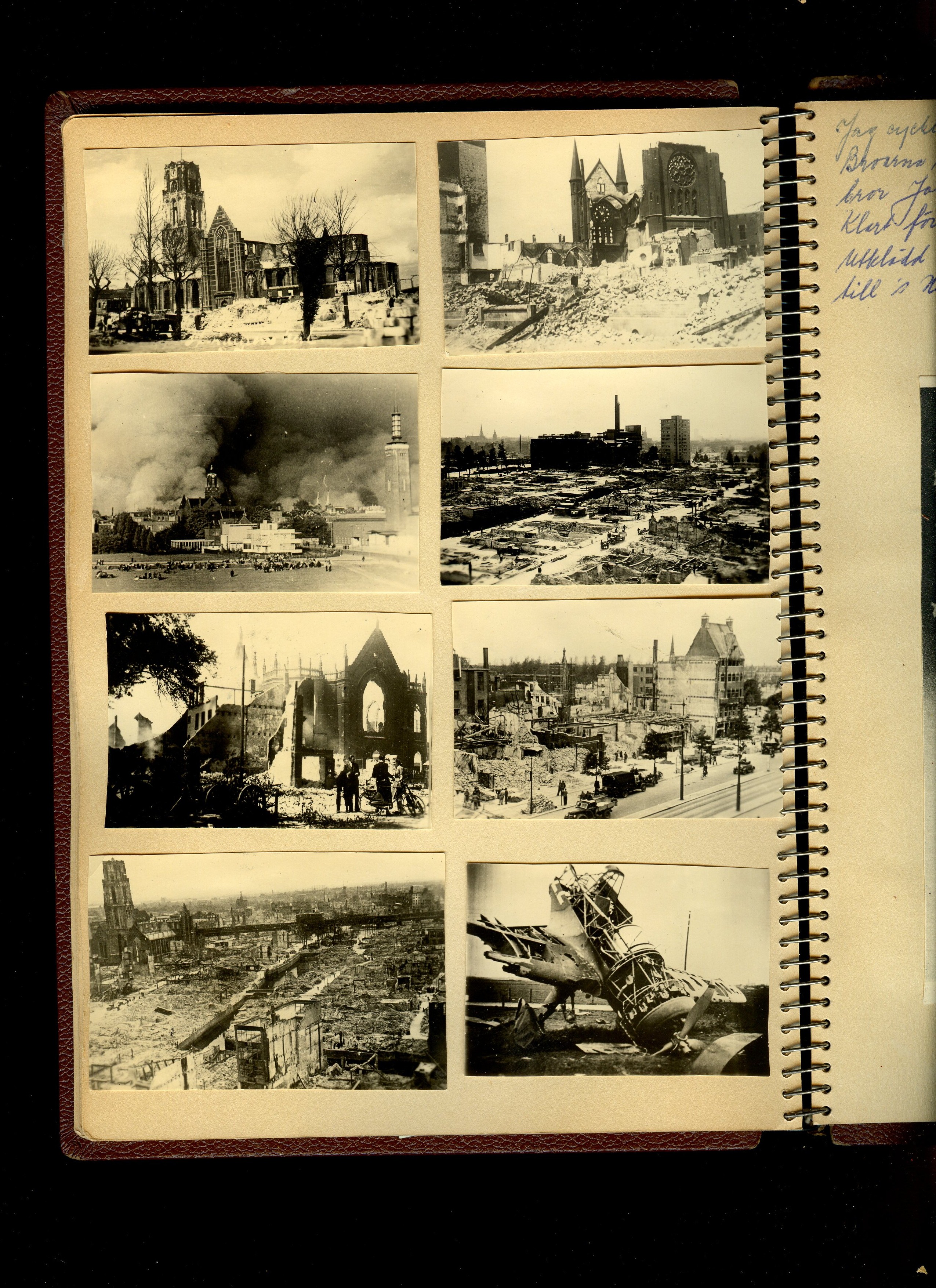
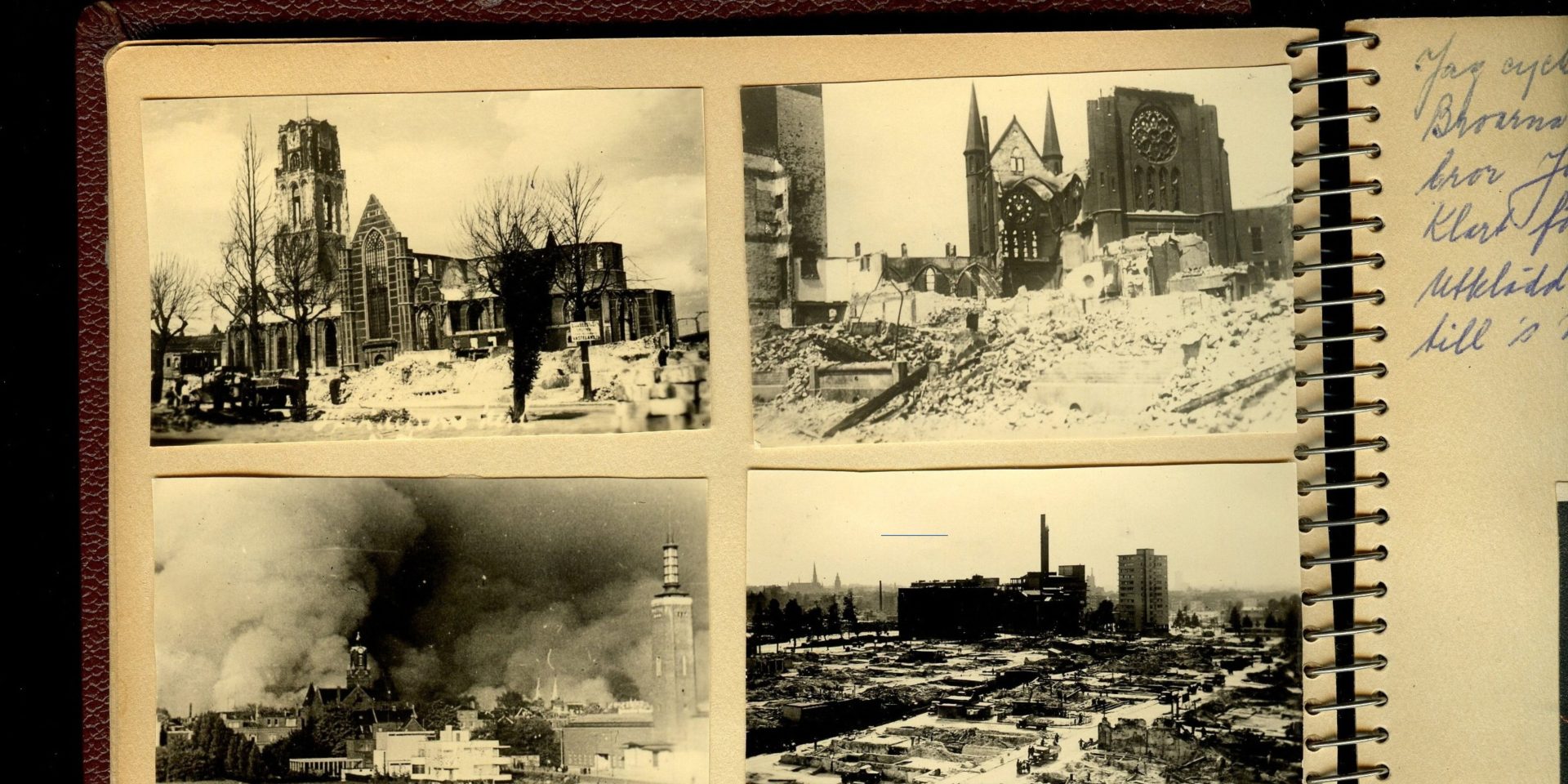
This article is an English translation of the Dutch article Project REMEMBER: Holocausteducatie en burgerschap in Europa. Published in Kleio (October 2026, www.vgnkleio.nl). Authors: Wibe Balt, Tim Huijgen, Jos de Vries.
Introduction
Between September and December 2025, sixty student teachers from Poland, Germany, Belgium, and the Netherlands embarked on a unique adventure: Project REMEMBER. Under the expert guidance of experienced history teachers from across the Netherlands, they delved into the compelling life story of Roosje Glaser. What made this online project so special?
Who Was Roosje Glaser?
Roosje was born into a Dutch-Jewish family. In 1933, she met Wim Vermeulen, the love of her life, with whom she shared a passion for dancing. Despite objections from their families, they moved in together and traveled extensively across Europe. Wim died suddenly in a plane crash in 1935. Later, Roosje married her dance teacher, Leo, but their relationship ended due to his ties with the National Socialist Movement (NSB) and her Jewish identity, which created an insurmountable conflict.
After the German invasion of the Netherlands in 1940, Roosje refused to comply with the discriminatory measures imposed on Jewish citizens. Despite the risks, she successfully established dance schools, introducing new dance styles that became popular. Her resistance led to betrayal by Leo, who reported her activities to the Kulturkammer, forcing her to close her schools. Undeterred, Roosje continued teaching dance classes illegally in the attic of her home.
In 1942, Roosje became engaged to Ernst, a Swiss national working in the Netherlands. However, her life took a dramatic turn when she was betrayed again. This time by Leo and his brother. Her refusal to wear the Star of David led to her imprisonment. After changing her identity and moving, she was arrested again and sent to a series of concentration camps. Roosje endured imprisonment in six concentration camps, including Auschwitz. During her captivity, she used her dance and organizational skills to maintain a semblance of control over her life. In the camps, she organized cabaret and dance performances, which not only provided her with a psychological outlet but also improved her status among prisoners and even SS officers. In Auschwitz, she was forced to work near the gas chambers and endured the horrors of medical experiments. Her ability to teach dance to SS officers enabled her to survive under unimaginable conditions. Of the 1,200 people transported in the same train as Roosje, only eight survived. She lost many family members, including her parents, who were murdered during the Holocaust.
In 1945, Roosje was liberated through an exchange arranged by the Swedish Red Cross, where she was traded for three German soldiers. Upon her arrival in Sweden, she weighed just 35 kilograms, but she quickly regained her strength and organized cabaret and dance performances in the reception center. Roosje chose to remain in Sweden, where she built a new life with her Swedish husband, Elon. She passed away in 2000 in Stockholm.
Roosje’s story remained a family secret until her nephew, Paul Glaser, accidentally discovered a suitcase bearing the family name in Auschwitz. This discovery prompted Glaser to conduct further research, leading him to Roosje in Stockholm. Inspired by her story, he wrote the book Dancing with the Enemy (1). Glaser reconstructed his aunt’s story using diaries, notes, letters, photographs, testimonies, and personal conversations. This material is extensively documented and partially accessible via the multilingual website of the Roosje Glaser Foundation (2).
Collaborating on Citizenship in Europe Through Holocaust Education
“In addition to increasing students’ knowledge of an event that fundamentally tested human values, teaching and learning about the Holocaust enables students to understand the mechanisms and processes that can lead to genocide. It allows them to analyze the choices people made to accelerate, accept, or resist processes of persecution and murder, even under extreme conditions” (3). Holocaust education is therefore of great importance for civic education, and all the more urgent given a recent UNESCO report indicating that more than three-quarters of surveyed teachers in the European Union have encountered antisemitic incidents in the classroom (4).
The goal of the online Project REMEMBER was to train student teachers across Europe—using Roosje Glaser’s life story—to develop Holocaust lessons that contribute to students’ civic skills. Participants in Project REMEMBER were placed in international teams. This setup encouraged intercultural exchange and invited students to explore remembrance cultures, curriculum traditions, and pedagogical approaches from a comparative perspective. Many participants were initially barely aware of the differences between countries in how the Holocaust is commemorated and taught in education. Through collaboration, students discovered diverse perspectives on a shared history. This awareness of different historical and societal contexts in itself forms an important dimension of global citizenship education for student teachers.
The central task for each team was to develop a lesson design in which Roosje Glaser’s life story played a meaningful role. As a didactic starting point, teams were required to formulate an Essential Question, which guided the learning process and invited students to engage in historical thinking and reflection (5). The lesson designs had to connect historical knowledge about Roosje and the Holocaust with current societal themes, such as global citizenship, human rights, and social justice.
During the design process, teams used the REMEMBER toolkit. This toolkit provided a structured seven-step process and various tools for developing educational activities around remembrance education (6). Each team was guided by an experienced history teacher or teacher educator who supported the collaboration, facilitated meetings, and ensured the didactic and pedagogical quality of the designs.
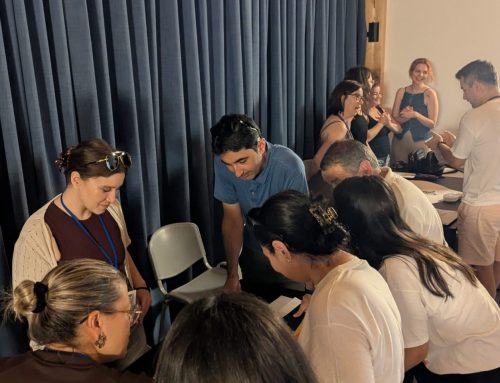
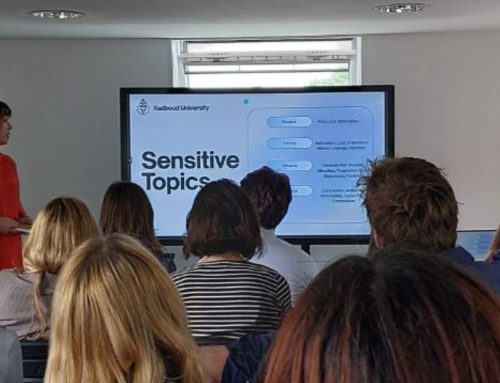
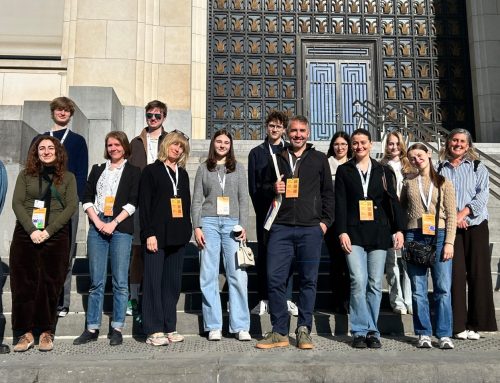
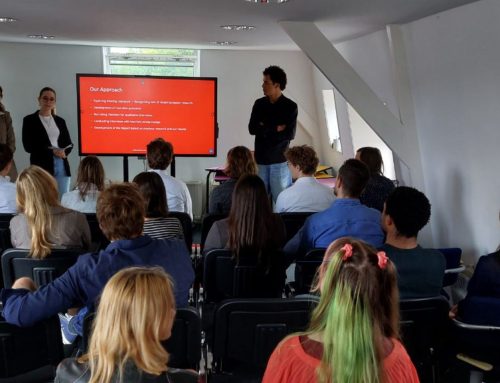
The project ran from September to December 2025. During this period, students attended an interactive lecture by Paul Glaser, worked in their teams on the lesson design, and participated in an interim feedback session with all groups. The project concluded with a final meeting where teams presented and explained their lesson designs to interested parties.
Three Key Lessons Learned
For many students, the subject held significant societal and personal relevance. Students emphasized the importance of Holocaust education in developing historical awareness and helping students better understand contemporary issues related to war, human rights, and dehumanization. Three central lessons can be drawn from the project.
Lesson 1: The Power of a Life Story
While attention and engagement in an online learning environment are difficult to measure, the substantive and historically focused questions from students suggested that Paul Glaser’s interactive opening lecture made an impression. Roosje Glaser’s life story demonstrated that the Holocaust was not only a historical process but also a history of individual people and their experiences. Although Roosje was an extraordinary woman, her story also offers a relatable human perspective on this history.
Roosje Glaser performing
This approach was reflected in all the lesson designs. From various angles, students explored how individuals in different historical and societal contexts act and make choices. Complex and sometimes uncomfortable questions were not avoided. The central question was always: How can human behavior be understood? Within the project, this proved to be a powerful question for stimulating historical reasoning and critical civic skills.
The lesson designs show that student teachers view Roosje’s story as a window into broader historical experiences. Research into her life and the choices she faced provides students not only with insights into the history of Jewish persecution and the Holocaust but also with opportunities to practice multiperspectivity and analyze victim, bystander, and perpetrator perspectives. Thus, the life story of one person becomes an invitation for collective reflection on human behavior, both in the past and in the present.
Lesson 2: The Value of an International Perspective
Students indicated that collaborating with participants from other countries gave them greater insight into how educational systems and cultural backgrounds influence the design of Holocaust education within Europe.
Almost all participants saw the added value of international collaboration. The project primarily raised awareness of differences in remembrance culture and school systems. These differences led to a broader perspective on education, citizenship, and Holocaust education among the participating students and supervisors. However, many students and supervisors also noted that the institutional embedding during the project varied greatly. They frequently mentioned that, despite its substantive value, the collaboration was time-consuming and organizationally challenging due to differing schedules and educational structures.
Lesson 3: Communication Is Key
Despite the added value of the international context and students’ willingness to use subject-specific expertise and (subject) didactic literature, the exchange of knowledge, teaching experiences, and didactic insights in an online environment proved complex. Questions such as how to establish and maintain effective contact, how to resolve online collaboration conflicts about work organization, and how to prevent rushing into lesson design played a significant role.
Additionally, students and supervisors observed differences in feedback cultures. While these differences are substantively valuable, they sometimes complicated collaboration. Clear variations in knowledge sharing, independence, and mutual cohesion were also visible between the different groups. For future projects, it is therefore important to better map out which mechanisms promote successful collaboration.
International Online Collaboration: Value and Tension
International collaboration on citizenship education and Holocaust education can be a valuable enrichment for the training of future teachers. Participants developed a broader perspective on historical interpretations, educational systems, and the societal significance of Holocaust education. Notably, there was a tension between, on the one hand, the positive effect that students reported on their sense of global citizenship and, on the other hand, signals of communication barriers that became apparent in their evaluations. This paradox shows that international collaboration is not only a learning goal but also a skill that requires explicit attention and support.
The fully online setup proved to be a limitation for interaction and in-depth collaboration. A blended or fully physical approach, combined with better institutional alignment, could strengthen communication, mutual engagement, and the joint design process in future editions.
About the Materials and Article
- The lesson materials developed by the various groups are available for free download at https://oercommons.org/courseware/lesson/146609. These are conceptual materials that can be further developed by teachers/researchers.
- The materials were compiled by student assistant Jos de Vries (University of Groningen) and made possible by a contribution from the Roosje Glaser Foundation (www.roosjefoundation.org).
- The authors thank Paul Glaser and Paul Holthuis for their cooperation and involvement in the project, as well as all Educational Design Leaders, guest speakers, and students. The authors would also like to express their gratitude to the international department coordinators: Henk Byls, Tina Grummel, Joost Hansen, and Dobrochna Hildebrandt-Wypych. The authors thank Mariejanne van Dijk for editing the manuscript.
- AI (ChatGPT and Mistral Vibe) was used for the preparation and editorial processing of this article and the teaching materials, under the responsibility of the authors.
About Project REMEMBER
Project REMEMBER (Rosie’s Example: Multinational Education on Memory, Bridging Empathy and Reflection) was a collaboration between Thomas More University of Applied Sciences (Mechelen, Belgium), the University of Oldenburg (Germany), Adam Mickiewicz University (Poznań, Poland), NHL-Stenden (Leeuwarden), and the University of Groningen (leading partner). The project was made possible by a grant under the Virtual International Collaboration Projects program (Ministry of Health, Welfare and Sport, https://edu.nl/4upeb).
Notes
(1) Glaser, P. (2025). Dancing with the Enemy: The Wartime Past of My Aunt Roosje. Cargo.
(2) https://edu.nl/ypggh
(3) International Holocaust Remembrance Alliance. (2023). Recommendations for Teaching and Learning About the Holocaust. IHRA. https://edu.nl/jwpb7
(4) UNESCO. (2026). Addressing Antisemitism Through Education: A Survey of Teachers’ Knowledge and Understanding. UNESCO. https://edu.nl/yejxd
(5) McTighe, J., & Wiggins, G. (2013). Essential Questions: Opening Doors to Student Understanding. ASCD.
(6) https://edu.nl/c9ca9
Image
[Cover Image] https://www.roosjefoundation.org/story/wp-content/uploads/c10.jpg
[For the editor: All images from the Roosje Foundation may be used copyright-free for this article, with permission granted by Mr. Paul Glaser.]