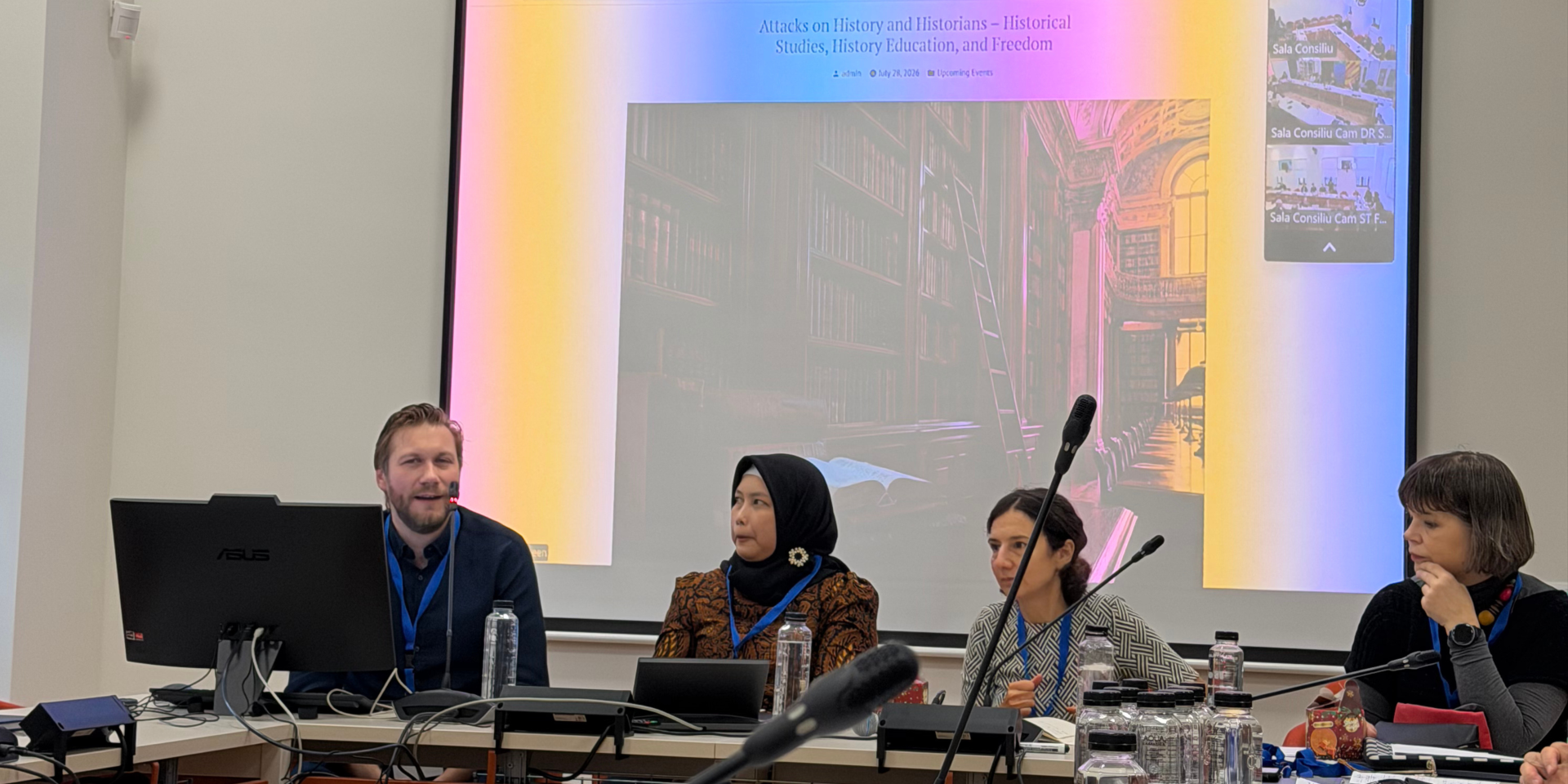
The international conference on attacks on history, historians and history education was held from October 29 to 31 in Bucharest, Romania. EuroClio was pleased to partner with Sorin Antohi (Academia Europaea), Antoon De Baets (Network of Concerned Historians) and Ruben Zeeman (Network of Concerned Historians) in convening this conference on these themes, including censorship.
The event served as a launch event of the forthcoming Palgrave Handbook of Attacks on History, initiated and edited by Antoon De Baets (Professor Emeritus of History, Ethics, and Human Rights, University of Groningen). As part of the conference, EuroClio and the Network of Concerned Historians (NCH) co-hosted a panel discussion on censorship in history education, with prof. Indah Utami (Indonesia), dr. Noémi Levy-Aksu (Türkiye) and prof. Joanna Wojdon (Poland).
The EuroClio team, represented by Andreas Holtberget and Irene Catania, travelled to the University of Bucharest to attend the conference. We will reflect on the event, highlighting some key takeaways from the presentations.
Attacks on History: A Human Rights Framework by Antoon De Baets
On 29 October, we began with Antoon De Baets’s opening speech and his fundamental question: when can we truly say that history is under attack?
Antoon observed that historians have been attacked at all times and in all places. Today is no exception. Historians are killed, arrested, and dismissed. Their books are banned. Their archives are destroyed. Their names appear on online blacklists.
He then proposed a definition: attacks on history are “threats or uses of force by State or non-State actors against historians or their work with intent to silence them”. At the heart of the definition, the intent is to silence. While the motive can vary (politics, religion, nationalism, national security, reputation, and so on), the intent is always to silence. As Antoon himself pointed out, “a claimed noble cause, such as ‘saving history from contamination,’ does not turn an attack into something else.”
What can we do about these attacks? While states carry the first responsibility, historians have also to act: they must defend history against attacks and abuses; they must expose and hold the attackers to account, and show solidarity with colleagues. Most importantly, historians must promote responsible history and teach the history of attacks on history itself. In conclusion, Antoon shared one final thought: “the decisive factor is not how often attacks happen. It is how free we are to push back. Where freedom of expression is strong, attacks can be named, exposed, and resisted. Where it is weak, silence spreads.”
Archival Silences as Attacks on History: Case Studies from Private Archives and Conflict by Dagmar Hovestädt
 On 30 October, Dagmar Hovestäd, Adjunct Professor at the Irish Center for Human Rights at the University of Galway, spoke about archives and the topic of archival silences.
What you cannot find in the archives says a lot.
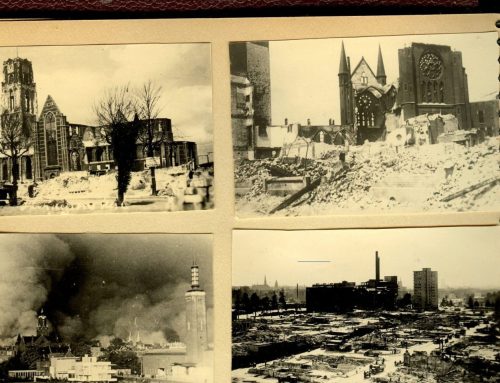
Attacks on history come in many forms, including on historical information as it is the raw material of historians. States, therefore, may block access to or destroy archives. In wars and post-war transitions, archives are usually primary targets. Dagmar briefly made some examples:
- the Second World War;
- the Iraq War (2003),
- the current wars in Ukraine and Gaza.
After the invasion of Iraq by the United States in March 2003, 7 linear miles of captured documents and media were brought to Doha for military analysis. They were returned to Iraq in 2013 but disappeared in the security apparatus, inaccessible to Iraqis.
Private archives are also important to consider because they do or do not give access, whatever the law of the state. Sensitive information, which could have been collected illegally, is stored in these archives so access is usually given in exceptional cases. For instance, Dagmar mentioned Ireland’s history and ongoing legacy of institutional, family separation and Church/State abuses. These include residential and industrial schools, Mother and Baby Homes, and Magdalene Laundries. Even though these private archives have their own regulations, they should be accessed if they were mandated by the state.
Attacks on Monuments in a Global Perspective: Legal Frameworks, Tools for Protection, Case Studies by Marie-Louise Jansen and Timothy W. Ryback
On the same day, Marie-Louise Jansen, co-founder of the Contested Histories Initiative (CHI), and Timothy W. Ryback, director of the Institute for Historical Justice and Reconciliation, talked about attacks on monuments.
Monuments, such as statues, memorials, and other historical legacies in public spaces, are attacked, removed, vandalized, and destroyed all over the world. They asked if these actions can be considered also as attacks on history.
Monuments commemorate and narrate a specific history and collective public memory. They are conventions of a particular time and they capture values of that particular time. When they are vandalized, removed, or even destroyed: do they silence history? We need to consider both intent and motive. Monuments are attacked for the message, history, and identity they represent in the public sphere. Sometimes, the removal of a statue can start a public discussion on history; in other words, it can produce social change in a positive way. When a statue is vandalized, if kept with its changes, it can show the complex nature of the statue itself and how it has been re-interpreted in society. However, sometimes, silencing history can have the opposite effect.
Interventions in History Online by Gerben Zaagsma
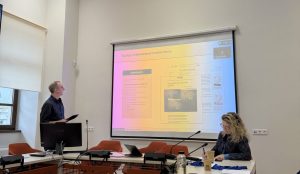
The day continued with a discussion by Gerben Zaagsma, Assistant Professor in Contemporary and Digital History at the University of Luxembourg, on history online.
Interventions in online history have been happening since the advent of the internet. For instance, blocking access to platforms, targeting websites, tweaking of search algorithms to manipulate access, removal of specific web pages and/or rewriting of content, etc. Today, internet censorship is more sophisticated, targeted, and harder to detect. Sometimes, history is not the primary target of censorship but it is an important consequence. At the same time, you do not need to censor historians and academics in general if the internet and the world are flooded with fake history and information. This causes a “reality fatigue” and people stop distinguishing between true and fake. They do not have the ability to believe in anything.
What are the counter-strategies? Gerben mentioned these:
- Digital literacy in history education.
- Countering online disinformation.
- Online fact-checking projects.
- Wikipedia Edit-a-thons.
- Transparency codes, f.e. AI labelling.
EuroClio & NCH Panel Discussion: Censorship and Self-Censorship in History Education in Indonesia, Türkiye, and Poland
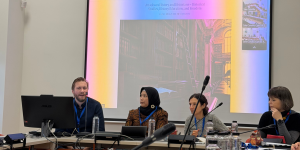
On 31 October, EuroClio hosted the roundtable on censorship and self-censorship in history education across Indonesia, Türkiye, and Poland.
Joanna Wojdon, Professor of History at the University of Wrocław, talked about censorship in history education in Poland.
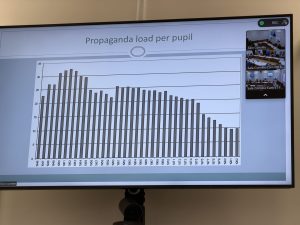 Under authoritarian regimes, textbooks are filled with propaganda designed to mold the pupil’s worldview. However, the transmission of this “official history” frequently fractures once it reaches the classroom. During Poland’s communist era, a stark divergence emerged between state intent and educational reality. While textbooks were made of propaganda—accounting for roughly 70% of the material—only a marginal fraction of teachers actively taught it. The state’s effort to indoctrinate the youth largely failed. In this environment, an underground movement flourished. By the 1980s, alternative historical narratives were widely accessible, giving teachers the agency to teach without following the official textbooks fully.
In contemporary Poland, the most profound long-term effect of the authoritarian regime is the black-and-white thinking. In other words, it created the idea that the population as whole was uniformly and actively opposed to communism. This binary mindset erases the complex reality of daily life under authoritarianism.
Noémi Lévy-Aksu, director of the Memory and Peace Studies Program at Hafıza Merkezi (Truth Justice Memory Center), delved into the topic of history as a contentious field in Türkiye.
From the 1920s onward, history was used in the new Republic to forge a cohesive national identity. This state-driven narrative—the Official History Thesis—sought to distance the new nation from its Islamic and Ottoman past. Instead, it emphasized the ancient roots of the Turkish people, projecting an unbroken Turkish presence in Anatolia and framing the Republic as the ultimate culmination of civilizational progress. Cracks in this official discourse began to emerge in the 1960s and 1970s, largely driven by intellectuals. The few people who attempted to challenge the narrative were systematically marginalized, often forced to operate outside the state apparatus, such as within private educational institutions. While the 1990s saw the introduction of diversity into the discourse, it was strictly for cultural consumption rather than political or structural change. Following the democratic backsliding and institutional purges of 2015-2016, the space for criticism shrunk, reaffirming history as the exclusive domain of the state. Currently, memory studies are the alternative space to discuss the past more critically, but it has profound limitations: lack of dissemination and of methodological rigor or primary sources because historians are not engaged in this process.
Indah Utami, Associate Professor in History Curriculum and Textbook and Head of the Department of History at Universitas Negeri Malang in Indonesia, discussed censorship and self-censorship in Indonesian history education. In particular, she asked: what can be said about the past?
The creation of a textbook involves the selection and removal of information. While not every omission constitutes censorship, textbooks pass through multiple filters of constraints, political pressure, and institutional gatekeeping. For instance, the Indonesian Communist Party (PKI) is usually described as the sole perpetrator of the September 30th Movement in 1965. When educational materials in 2007 attempted to present a slightly altered view of the 1965 events, the state responded with public book burnings. NGOs and concerned historians protested the burning of textbooks, but this event had profound and lasting effects.
- Publishers tend to follow the official narrative.
- Historians involved in textbook review tend to be cautious.
- When teachers discuss the 1965-1966 events, they are cautious about reactions from students, parents, colleagues, and religious communities. They are also afraid to express their interpretation in the classroom.
Indah shared her experience in writing the Kurikulum Merdeka textbooks. With her colleagues, they wanted to move beyond political and military narratives and include multiperspectivity, and historical inquiry. However, reviewers have had many concerns, such as: radical changes could be too dangerous; they are afraid of being ‘viral’ and receive backlash; ultimately, the possibility of resistance from teachers and the public.
What happens when the formal mechanism of censorship changes, but the memory of earlier sanctions and controversies continues to shape later decisions? The societal memory of past censorship has mutated into a primary driving force for present-day self-censorship. Yet, within this environment, we can employ what Indah called mlipir-mlipir—a Javanese concept of “carefully moving along an edge, recognising the edge of boundaries while trying to continue moving, pushing the boundaries, and avoiding direct confrontation.” By operating on the margins and navigating around censorship, it is possible to avoid the risk of jeopardising the whole project.
Conclusion
To conclude, this conference has brought many people together to discuss important topics of our time, raising questions about the past, what is happening around the world, and what we can do. As Antoon himself said during the OHTE Annual Conference 2026 in Strasbourg on 8 October: “we should try to prevent abuses and attacks. We need to investigate them, expose them, halt those responsible into account, and stand with colleagues who are attacked.”
Conference partners: International Commission of History and Theory of Historiography (ICHTH), Academia Europaea (Section of History & Archaeology), Network of Concerned Historians, EuroClio, Bucharest City Hall, University of Bucharest, Institutul pentru Investigarea Crimelor Comunismului și Memoria Exilului Românesc (IICCMER) Institutul de Istorie “Nicolae Iorga”, Universitatea “Petre Andrei”, Georg Eckert Institute
Convenors: Sorin Antohi, Antoon De Baets, Andreas Holtberget, Ruben Zeeman
Written by Irene Catania