Authors: Bjorn Wansink and Johan Wassermann
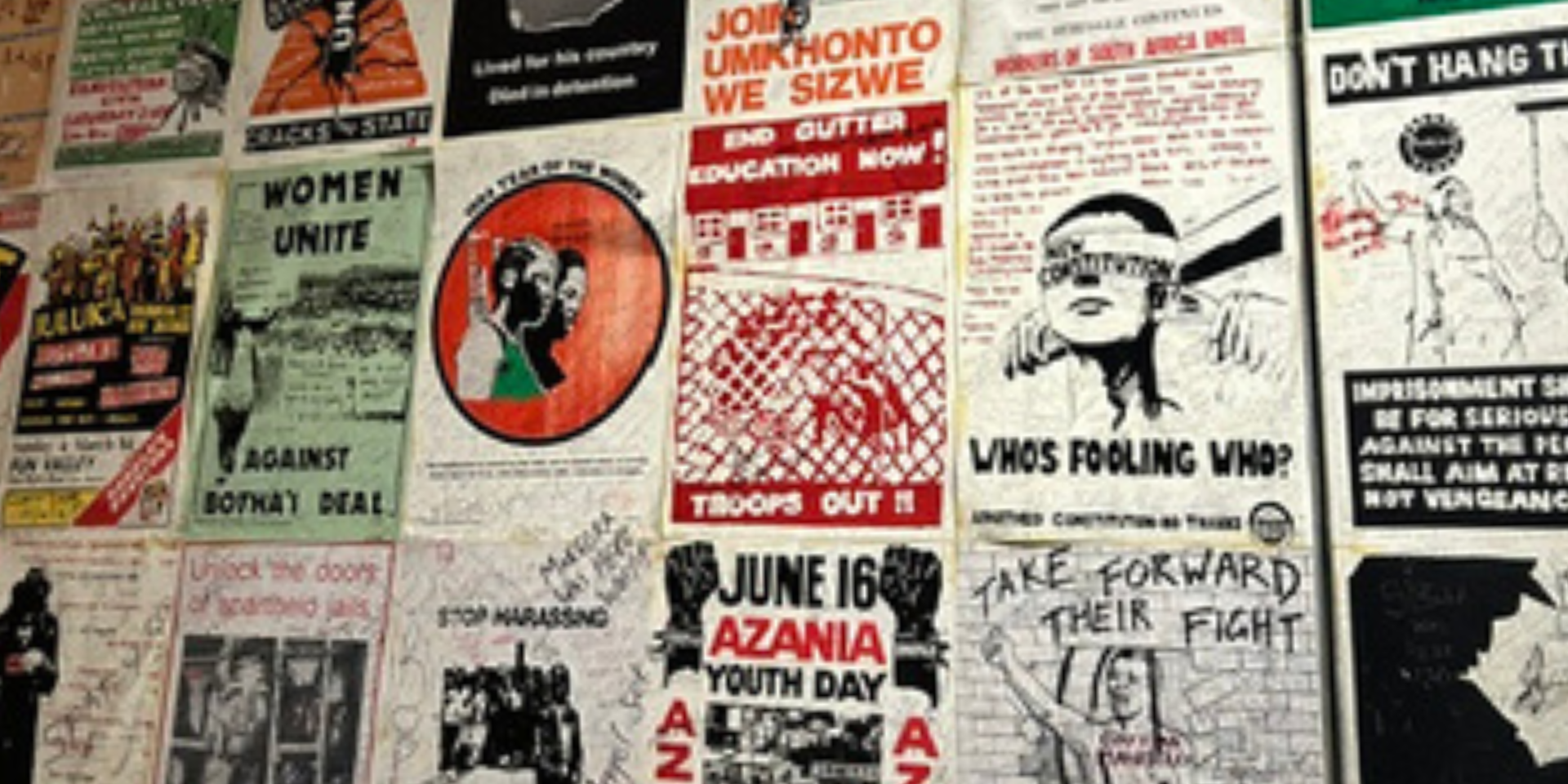
During the summer of 2026, I had the opportunity to visit Pretoria, South Africa, as a visiting scholar and teacher. I spent much time with Johan Wassermann, an expert in history education in South Africa and an inspiring researcher. During my visit, I taught at the University of Pretoria and visited several schools in the townships. I also had the opportunity to visit the Apartheid Museum and the township of Soweto.
It was an intense and thought-provoking experience. As soon as you arrive, you encounter traces of South Africa’s colonial history. You can hear people speaking Afrikaans, a language that originated from Dutch, and see how Dutch colonialism continues to shape contemporary South Africa. Yet, somewhat surprisingly, South Africa plays only a minor role in European history curricula. This could be seen as an example of a broader form of colonial amnesia (Raanhuis & Wassermann, 2026). During my visit, I became even more aware of the privilege that comes with being white, as well as how deeply rooted many of my own beliefs are in European ways of thinking.
In this interview, I talk with Johan about the complexities of history education in South Africa, the legacies of colonialism and apartheid, and possible futures for history teaching. Johan has conducted extensive research on history education and is acting deputy dean for teaching and learning.
Bjorn: Johan, could you introduce yourself and tell us what inspired you to become a researcher in history education?
Johan: I come from a rural background, and I think what really inspired me was a sense of history and stories as almost life companions. I also had a rather unusual relationship with television, because television was banned in South Africa until 1976. I was already fourteen years old when television was introduced. So, as a child, I grew up around storytelling, particularly through my mother.
I heard many family stories, but these were intertwined with broader nationalist narratives. For example, there were stories about the Anglo-Boer War. Two of my grandmother’s sisters died in the Bloemfontein concentration camp. There were also stories about movement and migration, because my parents moved quite frequently. So, I grew up hearing many different kinds of stories.
I think this contributed to the idea that we all have storied lives. I was also very fortunate at school to have teachers who instilled in me a love of history. My history teacher had quite a lot of freedom to decide how he wanted to approach history education. As a result, we were encouraged to think about the past and use evidence—what we would now call historical thinking. It was not simply about rote learning.
Bjorn: And what happened when you went to university?
Johan: Yes, that was probably the biggest cultural shock of my life. When I went to university, I almost failed my first test. I went to university in a different province, where the history I had been taught was Afrikaner nationalist history. There were no subtleties around it. It was essentially white nationalist history: a chronological political and military history in which Afrikaners were always the heroes. It really hit me hard. But there was a saving grace. We had a professor who taught African history. I would have dropped history if it hadn’t been for him. He reminded me that history is a construct, that it is contested, and that it is not a single narrative. It is an illusion to think of history as one singular national or nationalist narrative. Otherwise, I would literally have said, This is not for me. This is not a lifelong companion that I can build my life around.
Bjorn: For European teachers, what are the important things to understand about the role of history education in South Africa?
Johan: I think what really needs to be understood is the incredible dominance of an Afrikaner nationalist narrative. I was privileged to escape it, partly because of where we lived. But it was a master narrative that you had to learn by heart.
Bjorn: Including black students?
Johan: Absolutely. You needed to know the white heroes. It wasn’t about asking questions; it was about absorbing information. Those who could absorb the most and reproduce the most were rewarded. It was absolute memorization. And, of course, this has far-reaching consequences, because people of my generation who now hold high positions in education include many black South Africans, but still partly have these ideas. That is the history they learned. This was disrupted in the early 1990s as South Africa moved towards the end of apartheid and new curricula were introduced.
Bjorn: After apartheid formally ended, what role was there for history education?
Johan: Some of the first ideas after 1994 were actually that we didn’t need history anymore. The argument was: If this is what history does, if this is the history we have been teaching, and if this is the harm that was done to me, then we don’t need it. There was a really powerful lobby that saw little value in history. They argued that we needed to teach things that would give people jobs. So, the idea was: let’s get rid of history.
Bjorn: Did history education also contribute to apartheid?
Johan: Absolutely. If we circle back to apartheid history, it was literally rooted in the ideology of Christian National Education. Alongside love for the fatherland and love for the mother tongue came the idea of the history of your people.
That changed after 1994. Initially, there was a sense that we didn’t really need history anymore. The turning point came when Kader Asmal became Minister of Education. He was a history teacher himself. He had gone into exile in Ireland, but returned after Mandela was released and subsequently became Minister of Education. He argued incredibly strongly that we needed history. Every child in the country needed to understand: How did our history unfold? Why did these things happen? Why does the country look the way it does?
He established a very powerful commission to produce a report on history and archaeology, and that helped turn the tide again. Over time, this evolved into the curriculum we have today, although that curriculum is now quite dated—it dates from 2011. In that curriculum, historical thinking skills are essential. The idea is that history is a construct and that you need evidence to think things through. In other words, learners need to start thinking like historians from an early age. But I would say that it is very much an analytical engagement with history rather than a critical engagement. And that is where we still are today.
Bjorn: You distinguish between analytical and critical engagement. Could you explain that distinction?
Johan: I don’t think history education in South Africa is critical in the sense that we are teaching history for the betterment of society. In other words, you teach history for democracy, for human rights, against gender-based violence, and so on. It is analytical in the sense that you engage with history through historical thinking. But it is not necessarily intended to change society.
Bjorn: Is this changing at the moment?
Johan: We now have a new proposed curriculum that addresses some of these issues and is genuinely more Afrocentric. In other words, it is based on the idea of an African worldview and moves away from the assumption that Eurocentrism should be the norm—that we should organize our understanding of the world primarily around European and North American ideas and ways of thinking. I have expressed this as follows: Europe has been provincialized and Africa has been centralized.
This is the analogy I use. It is no longer the history of those staring from the ships towards the land. In other words, it is not the Dutch East India Company or Jan van Riebeeck looking towards the land and telling its history from their perspective, with that perspective becoming dominant. Instead, the dominant perspective becomes that of those standing on the land and looking towards the ships.
So, it is genuinely a process of Africanization, although it is not yet decolonization. And that might sound like a contradiction. But what has not yet been transformed or decolonized is the underlying idea of the curriculum itself and the way assessment is conducted. It still fits within the broader national curriculum framework, where assessment has to be carried out in particular ways. And the very idea of what a curriculum is remains underpinned by a broader national understanding of education.
Bjorn: To what extent are there different groups in South African society represented in the curriculum?
Johan: The first thing is to understand that it is incredibly complex. The official history taught through the curriculum and textbooks often conflicts with what you might call unofficial histories or family histories. It is genuinely contested at that level. There is no neat, single master narrative, although there was an attempt to create one around Mandela and the idea of reconciliation.
We have students from many different ethnic and tribal backgrounds, and many of them simply don’t see themselves in the curriculum. The ANC, for example, is represented in the curriculum, but where are the other liberation movements? For many students, the curriculum doesn’t reflect what their families actually experienced or went through.
On top of that, in Grade 12, students have to take an exam that, in many ways, their future depends on. That pushes history teaching towards rote learning. I think that also has an enormous influence on how history is taught in South Africa, and not necessarily in a positive way.
Bjorn: But students learn to think historically in a Western sense?
Johan: I mean, we rely heavily on historical thinking skills developed by scholars such as Peter Seixas, Carla Peck, and others. But there is some discomfort with the way these skills can sometimes be applied. You can almost take a reductionist approach to very complex historical issues and, in doing so, strip away the emotion.
And emotion and feeling are central to the South African context. Students may not initially have the vocabulary to articulate this in those terms, but they have a strong sense of, “I feel this. I feel that this is not right.” Part of that feeling comes from not seeing yourself represented in the curriculum. I’ve coined the phrase “historical loneliness” because, although school history is presented as a body of knowledge, students can nevertheless feel incredibly lonely within it. So I don’t think this Eurocentric, Western way of thinking about school history necessarily works neatly within the South African context. It doesn’t fully capture the complexity of how students experience and relate to the past.
Bjorn: Do you have any ideas about how we can embrace emotions and this more affective dimension of history?
Johan: I think it is incredibly difficult. Probably, we would first need a much broader consultation with teachers, learners, and other stakeholders about how to approach it. The idea is certainly not to traumatize learners all over again, although I think that is what is happening at the moment. We need to engage more with real-life examples of ordinary people—in other words, with a form of history from below. Students need to be able to identify with the people and experiences they encountered in history. That means moving beyond a history that focuses primarily on big, often white, men and their achievements.
I think there is room for social history. There is room for economic history. There is also room to move beyond the continuing dominance of political, constitutional, and military history. We need a much more human-centred approach. What were the real experiences of people? How can we understand those experiences? I think what this will require is for people to come together and talk about African ways of knowing and about what an Afrocentric approach to history education might look like.
Bjorn: I wonder to what extent the new curriculum you talked about will replace the old narratives.
Johan: In previous research, we investigated how Black African history teachers think about history. It was fascinating to see that some of the older teachers we worked with in schools made it very clear that they had been socialized into a Eurocentric worldview. They had been taught the history of a Eurocentric world, and they were very comfortable with that.
It is the younger generation of teachers, who came through a different educational system after 1994, who are much more open to the idea of an Afrocentric history. They are more willing to think differently about history and to use different forms of historical evidence, such as oral history. I think that when the students we see around campus today become the decision-makers, we will see a much more fundamental decolonization of history. It is a work in progress.
Bjorn: In many countries, the history curriculum is strongly politicized and patriotic. This seems to be less the case with the 2011 curriculum in South Africa and the new proposal. Would you agree?
Johan: What I’m about to say might sound strange, but I don’t think the South African government after 1994 really understood the power of school history or tried to use it to its advantage, as Zimbabwe did with its project of patriotic history. I don’t think there was a real political initiative around history education. There was certainly a lot of rhetoric initially, but the curriculum we eventually ended up with was largely developed by serious historians.
There is, however, an interesting and controversial decision in the new proposed curriculum: South African history ends in 1994. And why is that? Well, I think it means you don’t have to deal with the subsequent thirty years and some of the real challenges we face as a result of the governance of the past three decades—issues such as failing infrastructure, a struggling economy, and systematic challenges to human rights. I think ending the curriculum in 1994 is, in a sense, a way of avoiding those issues.
Bjorn: How is the new curriculum viewed by teachers?
Johan: There is definitely also pushback, particularly from powerful private and independent schools. I remember one session where we were discussing the new curriculum, and one of the teachers was very open about it. He said, “Listen, at our private independent school, our learners go overseas. Why should they need to know about Africa?” I had to bite my tongue.
But it reflects a particular sense of being temporary in this space, combined with the idea of a kind of global whiteness. We are rich and privileged; we have global networks; this is where we feel comfortable and where it is convenient to be. So the priority becomes preparing learners for those global networks rather than preparing them to understand South African or African history.
Bjorn: What are your hopes for history education in South Africa?
Johan: History is an immensely popular subject in schools, partly because it has become a dumping ground for learners who struggle with science and mathematics. My hope is that, through this new curriculum, we can begin a process of unlearning: unlearning the legacies of rote learning and the persistent master narratives of the past.
But I also hope we can explore what it means to think historically in ways that make sense within our own context. It is impossible simply to reject ideas about historical thinking that have emerged from Europe. There is real merit and value in them. But how can we indigenize them? How can we make them our own? And how can we move beyond the confining structures of coloniality—the assumptions about what a curriculum should look like and how assessment should dominate everything?
If we can move beyond those structures, teachers can start teaching in a more authentic African way. They won’t constantly be thinking, “The test is coming, the exams are coming. The lives of these learners depend on this.” Instead, we can create space for genuine historical learning.
And we need to invest time and money in developing historical sources and teaching materials that can be used by everyone. We shouldn’t have the sense that we are studying a global Africa while the evidence and skills we use come primarily, or even exclusively, from a Global North perspective.
Ultimately, I hope my students go out into the world and become agents of change. If we do this for long enough, they will become the critical mass. They will eventually become powerful in their own right—as examiners, textbook writers, subject advisors, and teachers—and they can drive the process of creating something that is unique to us, rooted in our context, and that genuinely works for us.
Conclusion
Bjorn: Talking with Johan was thought-provoking. What struck me was his strong awareness of power structures and the privileges that come with them. When walking with him around the university, I noticed that he seemed to know everyone: students, teachers, administrators, gatekeepers, and cleaners. He spoke to people in different languages and took the time to engage with them. In a society that was, and in many ways still is, deeply divided, Johan emphasized the importance of ensuring that nobody remains nameless or invisible. A message important for us all.
The students I spoke to in the townships were also very aware of the dominance of white and European-oriented narratives in history education. During one lesson, a black student asked me directly: “We in South Africa learn so much about Europe. What do you teach your students about us?” That question has stayed with me.
South Africa currently plays only a minor role in Dutch history education, and probably also in most European countries. Yet the historical connections between Europe and South Africa are profound. Joyce Raanhuis and Johan Wassermann (2026) recently wrote an important article about the relationship between the Netherlands, Europe, and South Africa, which provides a valuable starting point for exploring these connections.
A next step, therefore, is not simply to include more South African history in the curriculum, but to help students understand colonialism and the power relations it created—and how these relations continue to shape our world and affect millions of people today. Johan’s perspective reminded me that teaching history from multiple perspectives is not only about adding more voices to the curriculum. It is also about critically examining whose voices have traditionally been given authority, whose perspectives have been marginalized, and why.
Finally, Johan has taught me that decolonizing knowledge from European epistemologies is a difficult and complex process. Shifting towards more Indigenous African epistemologies is challenging, but meaningful changes are taking place.
Want to read more?
Langa, M., Wassermann, J., & Maposa, M. (2021). Black African parents’ narratives on apartheid schooling and school history. Perspectives in Education, 39(3), 3–16. https://doi.org/10.18820/2519593X/pie.v39.i3.2
Raanhuis, J., & Wassermann, J. (2026). “Colonial amnesia?”: The Dutch monarch’s state visit to the Slave Lodge Museum, South Africa, through the lenses of newspapers. South African Journal of Cultural History, 40(1), 1–33. https://doi.org/10.54272/sach.2026.v40n1a1
Wassermann, J., & Angier, K. (2024). The epistemic considerations of PGCE-History students: A South African case study. In H. Åström Elmersjö & P. Zanazanian (Eds.), Teachers and the epistemology of history (pp. 61–76). Palgrave Macmillan. https://doi.org/10.1007/978-3-031-58056-7_4
Wassermann, J., & Bentrovato, D. (2018). Confronting controversial issues in history classrooms: An analysis of preservice high school teachers’ experiences in post-apartheid South Africa. Yesterday & Today, (20), 72–90.
Wassermann, J., & Wohlberg, A. (2023). Lesgeven over de strijd van zwarte vakbonden in Zuid-Afrika tijdens apartheid. Hermes: Tijdschrift van de Vlaamse Vereniging voor Leraren Geschiedenis, (27), 27–32.