What happens when we study colonial history not only through its effects on human societies, but also through its impact on nature and animals? This interdisciplinary teaching unit invites students to shift from an anthropocentric—human-centred—perspective and explore how animals, particularly elephants, were drawn into colonial structures of power and domination. Focusing on 19th-century British travel writing about Ceylon (present-day Sri Lanka), students will analyse how elephants were portrayed not just as exotic curiosities or labouring beasts, but as complex symbols within colonial worldviews. Using the lens of Animal Studies, the unit challenges students to rethink historical narratives, uncover human-animal entanglements, and reflect on how the colonial gaze still influences today’s environmental and ethical debates.
The resource is available in English, Sinhala and Tamil languages.
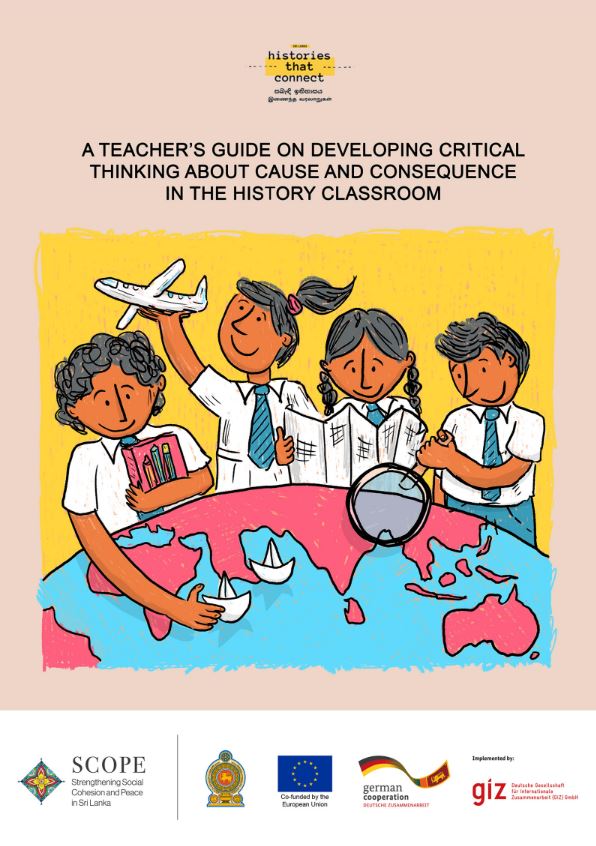
This educational resource has been authored by Pawan Wijesinghe, Susanne Popp and Andreas Holtberget in the framework of the ‘Histories that Connect – Sri Lanka II‘ project, supported by Strengthening Social Cohesion and Peace in Sri Lanka (SCOPE) programme. SCOPE is co-funded by the European Union and the German Federal Foreign Office and implemented by GIZ in partnership with the Government of Sri Lanka. The content of the teacher guide does not represent the official position of the European Union, the German Federal Foreign Office, GIZ, or the Government of Sri Lanka.