
In his doctoral research, Edgars Bērziņš examined how narrative competence can be developed in secondary school history education. His study resulted in a systematic methodology for understanding, fostering, and assessing students’ historical narratives, as well as a theoretically grounded and empirically tested didactic model of narrative competence. This model was presented and explored with educators during the EuroClio Annual Conference “Patterns in History?” in 2025. In the interview below, Edgars Bērziņš reflects on the ideas behind the model, shares insights from its trial with history teachers, and discusses what developing narrative competence can mean for everyday classroom practice.
You argue that narrative plays a central role in how history is taught and learned. What do you mean when you speak specifically of a “narrative competence,” and how does this concept help us think more precisely about what students are actually learning when they work with historical narratives?
Every society tells stories to make sense of human experience; historians simply do it more systematically. Historical narratives organise the past into meaningful accounts, expressed through visual, written, or oral storytelling. In humanities, narratives are analysed through their structure – actors, plot, and language but in the social sciences, they are understood as ways of interpreting events from different perspectives and within specific contexts. In history education, these two perspectives meet, which is why historians spend so much time debating both – structure and interpretation – of the past. A small experience during the EuroClio Annual Conference “Patterns in History?” (2025) in Bratislava illustrates this well. On my way to the conference venue, I unexpectedly encountered a commemorative gathering at a large monument (see the image below). I did not recognise the monument, the people present, or the purpose of the event. Faced with this situation – limited evidence and many unanswered questions – I found myself doing exactly what historians and students alike are trained to do: I began constructing a narrative.

80th Anniversary of Bratislava's Liberation from Nazi Occupation by Soviet Forces. Slavin Memorial, Bratislava, April 4, 2025. Image created by the author.
By searching online, using Google Lens to identify the monument, and speaking with some attendees, I gradually pieced together the “puzzle”. The event marked the 80th anniversary of Bratislava’s liberation from Nazi occupation by Soviet forces and was taking place at the Slavin Memorial. I began identifying the actors involved, placing the event in its historical context, and also recognising its contemporary political significance in light of the ongoing war in Ukraine. Even without fully understanding the spoken language, the speeches, symbols, and moments of silence shaped how the past was being communicated in the present. The experience made something very clear: the same historical event can be narrated differently depending on perspective and purpose.
For a brief moment, I realised that I had unintentionally walked into a real-life history exercise: incomplete evidence, unfamiliar actors, and the need to construct a convincing explanation. This is precisely where narrative competence becomes important. The past cannot be accessed directly. What we call “history” is always a reconstruction–built from evidence, shaped by perspectives, and expressed through narrative. Narrative brings scattered facts together and turns them into meaningful sequences. It allows learners to recognise cause and effect, understand continuity and change, and explain how historical processes unfold.
Narrative competence can therefore be understood as the ability to reconstruct the past in the form of an interpreted and narratively structured account. It is not simply the ability to tell a story about the past. Rather, it represents a structured mode of thinking that integrates historical knowledge, interpretive skills, and attitudes such as empathy and ethical awareness. The narrative competence is expressed through the integration of narrative components – actors, plot, and language – with competence components – knowledge, skills, and attitude – within a unified interconnected structure (see below).
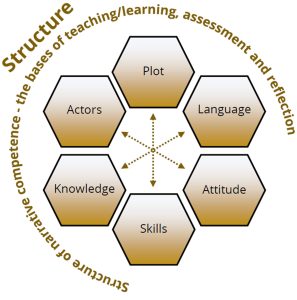
The structural dimension of the didactic model of narrative competence. Image created by the author.
Narrative competence helps us understand more precisely what students are actually learning in history. Rather than focusing only on recalling historical facts – an activity that history classrooms have traditionally treated with great seriousness – it shifts attention toward how students reconstruct and interpret the past. When students work with historical narratives, their learning becomes visible in how they organise events, explain causes and consequences, and give meaning to historical processes.
In this sense, narrative competence provides an analytical framework for identifying and assessing different but interconnected dimensions of historical learning (see the diagram below). Instead of treating narrative simply as a stylistic product or a general communication skill, the concept views students’ narratives as interpreted reconstructions of the past in which knowledge, skills, and attitudes are integrated within a structured form.
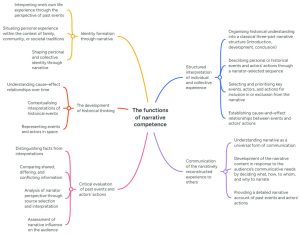
The functions of the narrative competence. Diagram created by the author.
The concept of narrative competence makes visible how learners make sense of the past. Rather than simply recalling isolated facts – an activity that history education has traditionally treated with considerable enthusiasm – students reconstruct, interpret, communicate, and evaluate historical events as part of a single, integrated process. Through narrative, they organise historical information into coherent accounts that reveal relationships such as cause and effect, continuity and change, and the broader logic of historical developments.
Narrative competence also becomes visible in how students interpret historical actors and events within their wider contexts. It appears in the ways they use narrative structure and language to communicate meaning to an audience, and in the decisions they make about what to include, emphasise, or leave out when shaping a historical account. At the same time, it shows whether students can distinguish facts from interpretations, recognise different perspectives, and critically examine competing narratives about the past.
Yet narrative competence goes beyond cognitive and communicative abilities. It also reflects how students relate historical knowledge to questions of identity, values, and civic orientation. Through narrative, learners connect individual experiences with the collective past, developing empathy and engaging in ethical reflection. In this sense, narrative competence allows history learning to be understood – and assessed – not as the memorisation of facts, but as the meaningful reconstruction of the past through narrative that integrates knowledge, skills, and attitudes.
International organisations and professional networks have been emphasising the importance of narrative for quite some time now. From your research, where do you see the biggest gap between these policy ambitions and everyday classroom practice?
International organisations and professional networks have long emphasised the importance of narrative in history education. However, my research suggests that the main gap between these policy ambitions and everyday classroom practice lies in the fact that narrative is widely promoted but rarely operationalised as a clearly defined learning method and learning outcome.
At the policy level, narrative is often described as essential for developing historical understanding, multiperspectivity, and civic engagement. In the classroom, however, narrative frequently appears in a much more limited way. It might be used to make a lesson more engaging – for example, when a teacher tells a story about a historical figure–or it may appear at the end of a unit as a written assignment where students are asked to “write about what happened.” What is often missing is systematic guidance on how historical narratives are constructed: how events are connected, how interpretations are formed, and how meaning emerges through narrative choices.
A second gap concerns assessment. Although competence-based education is strongly emphasised in policy documents, teachers often lack clear criteria for recognising what constitutes quality in a historical narrative. In practice, assessment frequently focuses on factual accuracy or language correctness. Yet a well-developed historical narrative also requires something more: the ability to explain causality, to meaningfully integrate historical actors, and to use narrative structure to make sense of historical processes. These aspects are often difficult to capture without a clearer analytical framework.
The gap becomes even more visible when we consider the reflective and ethical dimensions of history learning. Policy frameworks often highlight identity, values, and historical consciousness. In everyday classroom practice, however, lessons are shaped by time pressure, curriculum demands, and preparation for examinations. As a result, students may retell events from the past, but they are less frequently encouraged to reflect on perspective, responsibility, or the ethical implications of historical interpretation.
For this reason, the key challenge is not a lack of commitment among teachers. Rather, it is the absence of a clear didactic framework that translates policy ambitions into concrete teaching and assessment practices. Without such a framework, narrative remains a powerful idea in policy
documents – but only a partially realised element of everyday history education.
One of the key outcomes of your doctoral research is a didactic model for the development of narrative competence. Please elaborate on its content and foundational principles!
The didactic model for the development of narrative competence is designed as a systematic framework that supports both the teaching and the assessment of narrative competence in secondary school history education. It is grounded in narrative theory, competence-based education, and cognitive learning theory, and it conceptualises narrative competence as a clearly defined learning outcome.
The model operates as an integrated and mutually reinforcing system in which information is continuously received, interpreted, and applied across several dimensions of the teaching and learning process. In this sense, the development of narrative competence is understood as a cyclical process in which learning, assessment, and reflection constantly inform one another. I propose this model as a tool for the purposeful development and assessment of narrative competence in secondary school history education, while its underlying principles may also be applicable in other academic disciplines (see below).
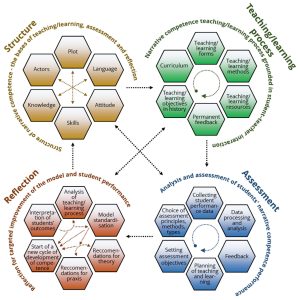
A didactic model of narrative competence for history teaching/learning process. Image created by the author.
In terms of its structure, the model consists of four interrelated dimensions: the structural dimension, the teaching and learning dimension, the assessment dimension, and the reflection dimension. These dimensions function as a coherent system rather than as separate elements.
The structural dimension forms the conceptual foundation of the model. It defines narrative competence through six interconnected components that combine competence elements–knowledge, skills, and attitudes–with narrative elements–actors, plot, and language. Together, these components describe what students need to understand and be able to do when constructing historical narratives.
The teaching and learning dimension describes how narrative competence can be purposefully developed in the classroom. The process begins with clearly defined learning objectives and is supported by the careful selection of historical content, teaching methods, and learning materials. Throughout this process, teachers provide guidance and continuous feedback that help students gradually improve their ability to construct meaningful historical narratives.
The assessment dimension focuses on analysing and evaluating students’ development of narrative competence. This process begins with defining assessment objectives and selecting appropriate assessment principles, types, and methods. Teachers then collect and analyse evidence of students’ performance–for example through written narratives, presentations, or interpretive tasks–in order to provide well-grounded feedback and support further learning.
Finally, the reflection dimension ensures the continuous improvement of both students’ learning and the model itself. By analysing learning outcomes and interpreting assessment results, teachers and researchers can critically reflect on the effectiveness of the teaching and learning process. This reflection may lead to adjustments in teaching strategies, assessment practices, or even the model’s components, thereby initiating a new cycle of competence development.
In this way, the model functions as a dynamic system that connects theory, classroom practice, and reflective evaluation, supporting the systematic development of narrative competence in history education.
You trialled and discussed your model with an international group of educators during the EuroClio Annual Conference “Patterns in History?” in 2025. What kinds of reactions or discussions emerged among the participating educators? Were there moments where teachers strongly recognised their own classroom experience in the model, or moments of scepticism? Looking back, what were the most interesting or unexpected insights you gained from trialling the model with a diverse group of history educators?
When I presented and trialled the model during the workshop, the discussions that followed were both affirming and revealing. One of the strongest reactions among participants was a sense of recognition. Many teachers said that the model gave language to challenges they encounter daily in the classroom but had previously struggled to describe. In particular, the distinction between narrative as a written product and narrative as a competence resonated strongly. Teachers often noted that their students can produce fluent and well-structured texts, yet still struggle to explain why events happened, how historical actors influenced outcomes, or how different perspectives shape historical interpretation. These are precisely the aspects the model aims to make visible.
At the same time, the discussion also included moments of constructive scepticism. Some participants wondered whether introducing a structured model might limit students’ creativity or make narrative work feel overly formal. This concern opened an interesting conversation. It became clear that the model does not prescribe what story students should tell, but rather helps teachers see what kind of historical thinking becomes visible through narrative. For several educators, this shift–from controlling students’ stories to making their thinking transparent–was an important insight.
Assessment was another topic that sparked lively discussion. Teachers immediately recognised the potential of the model to support more precise and fair assessment of students’ narratives. However, many also asked very practical questions: How can such criteria be integrated into existing grading systems? How can teachers evaluate narrative quality without turning storytelling into a rigid checklist? These questions confirmed one of the key findings of my research: while narrative is widely valued in history education, teachers often lack a shared analytical language for discussing what makes a historical narrative meaningful or convincing. In this sense, the model was seen not only as a teaching tool, but also as a professional language that could help educators discuss and compare their practices.
One of the most interesting insights emerged from the diversity of the group itself. The participating educators came from different countries and educational systems, yet they described remarkably similar challenges in their classrooms. Whether teaching in Northern, Western, or Eastern Europe, teachers recognised the same patterns: students often retell events but struggle to explain causality, integrate historical actors meaningfully, or reflect on perspective. This suggests that narrative competence addresses structural aspects of historical learning that transcend national curricula.
At the same time, the discussions also highlighted how sociopolitical contexts influence narrative interpretation. Teachers shared examples of how certain historical topics–such as wars, revolutions, or national independence movements–are narrated differently depending on cultural and political context. This reinforced the importance of multiperspectivity and ethical reflection as key components of narrative competence.
Looking back, the most valuable outcome of the workshop was not reaching consensus, but creating a space for dialogue. The model functioned as a shared reference point that helped educators reflect more precisely on their practice, articulate their tacit knowledge, and question some of their assumptions about narrative in history education. In this sense, the experience confirmed one of the central arguments of my dissertation: narrative competence is not only a learning outcome for students, but also a conceptual tool that helps teachers analyse, discuss, and improve history teaching and learning.
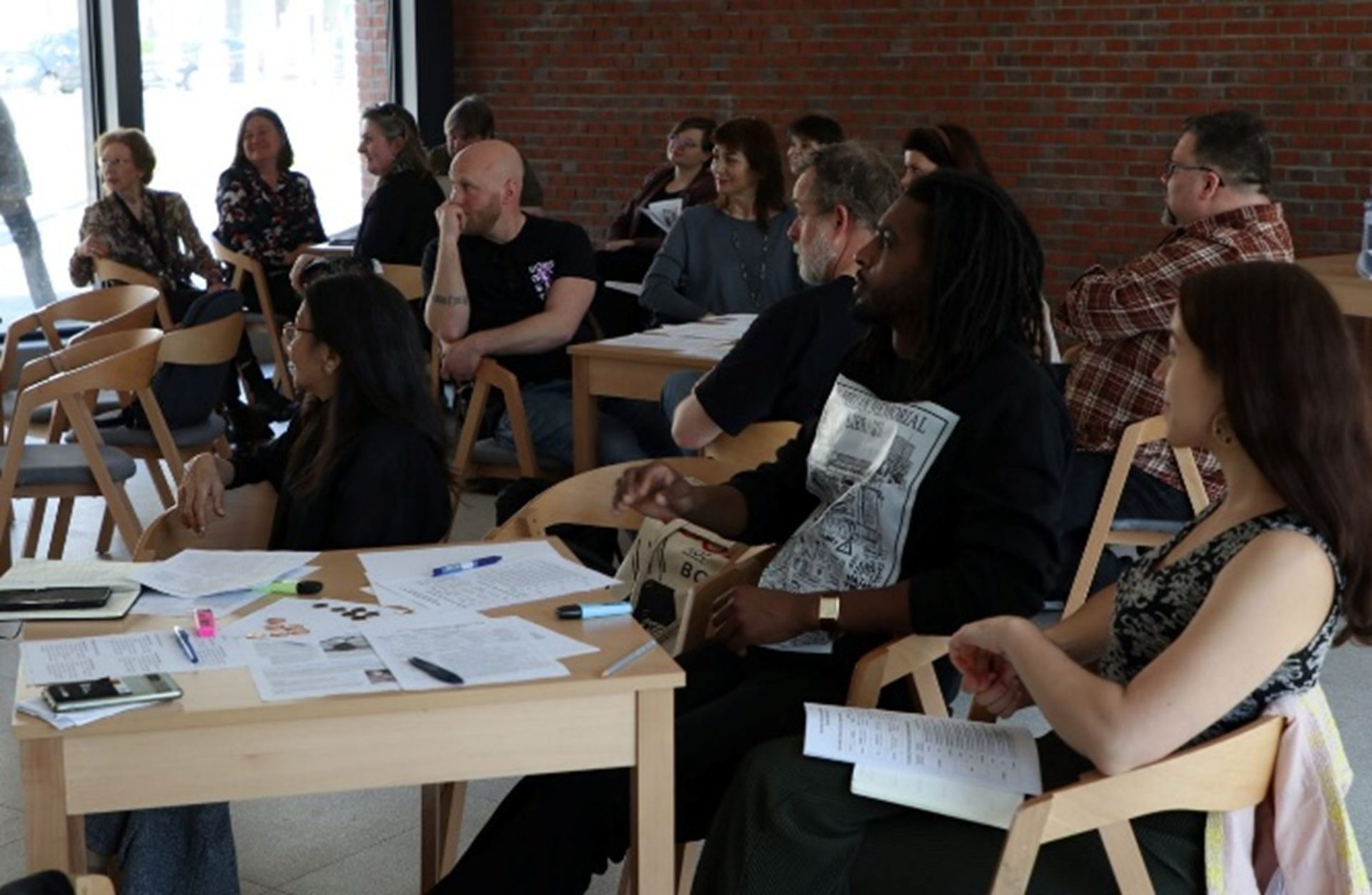

trialling-image2

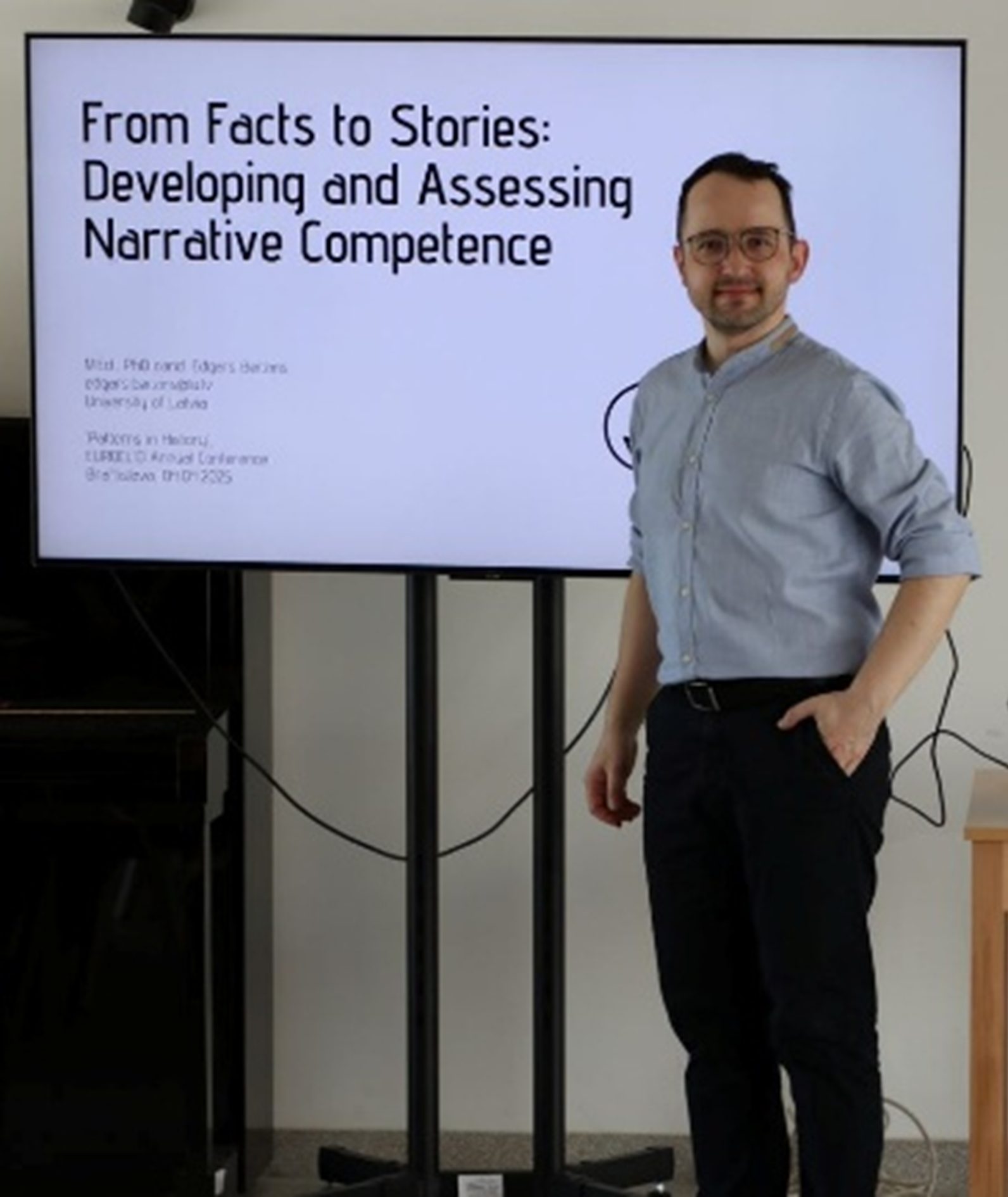
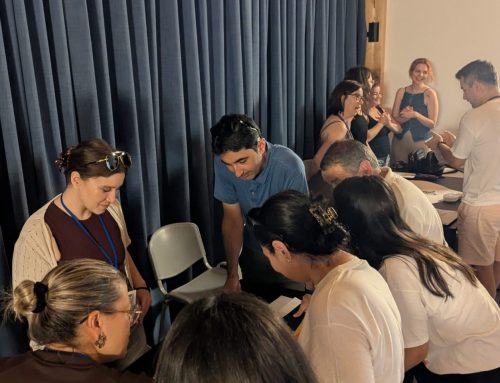
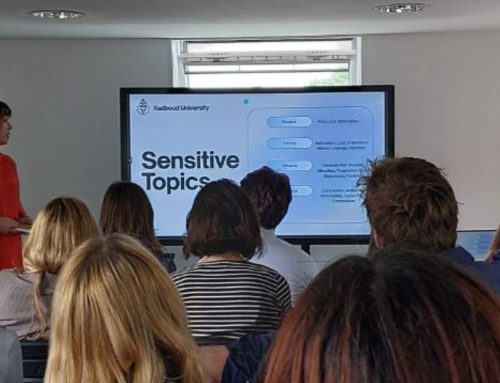
Hosting the session “From Facts to Stories: Developing and Assessing Narrative Competence” at the EuroClio 2025 Annual conference in Bratislava. Images created by EuroClio.Hosting the session “From Facts to Stories: Developing and Assessing Narrative Competence” at the EuroClio 2025 Annual conference in Bratislava. Images created by EuroClio.
One of the major challenges in history education is assessment. You developed a set of assessment criteria for narrative competence. What do these criteria focus on, and how do they differ from more traditional forms of assessing historical knowledge?
Assessment has always been one of the most challenging aspects of history education, and this becomes particularly visible when narrative competence is treated as an important learning outcome. Traditionally, history assessment has focused primarily on factual knowledge–whether students can recall dates, events, or the names of historical actors. In contrast, my research approaches assessment from a competence-based perspective. Instead of asking only what students remember about the past, it examines how they interpret, structure, and responsibly engage with the past through narrative.
The assessment framework for narrative competence is aligned with learning objectives defined in Latvian education policy documents and international recommendations for secondary school history education. These frameworks emphasise a shift from factual recall toward interpretation, multiperspectivity, and responsible historical understanding. Accordingly, the assessment model evaluates three interconnected components of narrative competence–knowledge, skills, and attitude–across three levels of performance (high, medium, and low), drawing on principles of the SOLO taxonomy.
Assessment of knowledge focuses on students’ understanding of how historical meaning is constructed within a narrative. This includes the ability to distinguish facts from interpretations, situate historical actors within their contexts, structure events into a meaningful plot, and use appropriate historical terminology. Assessment of skills examines how students construct historical narratives in practice. For example, students may be asked to explain why a particular historical event unfolded as it did. Here, assessment focuses on whether they can select relevant actors, establish causal relationships, and organise events into a coherent narrative that explains historical processes rather than simply listing them. Assessment of attitude addresses the reflective and ethical dimensions of historical thinking. This includes students’ openness to perspectives, their awareness of historical responsibility, and their ability to recognise how narratives shape our understanding of the past.
Based on these principles, I developed a methodology for assessing narrative competence grounded in clearly defined criteria. The purpose of this methodology is not only to evaluate students’ narratives but also to diagnose the most characteristic weaknesses in their historical reasoning–for example, difficulties in explaining causality or integrating historical actors into meaningful interpretations.
To test and validate the approach, the methodology was applied to a stratified sample of students’ written historical narratives. The evaluation combined expert assessment with artificial intelligence–assisted analysis, allowing for a systematic and analytically robust examination of narrative competence across different levels of student performance.
From a teacher’s perspective, what would assessing narrative competence look like in practice? For example, when reading a student’s written answer or project, what would they be paying attention to differently?
When assessing narrative competence, the teacher shifts their focus from simply checking whether facts are correct to examining how historical meaning is constructed through narrative.
First, the teacher looks at how the student structures the narrative. Does the account have a clear beginning, development, and conclusion? Are events connected through logical and causal relationships, or are they simply listed one after another? In other words, the key question becomes: Does the student explain why events happened and how they are connected?
Second, attention turns to historical actors. Teachers consider whether students meaningfully select and contextualise actors, explain their actions and motivations, and show how different individuals or groups interact within historical processes. A student who simply lists names demonstrates factual knowledge, but a student who explains how those actors shaped events is demonstrating narrative competence.
Third, teachers examine interpretation and selection. When reading a written answer or project, they ask why the student chose certain events or perspectives and left others aside. These choices reveal how students interpret the past and what they consider historically significant.
Fourth, language use becomes an indicator of understanding rather than just correctness. Teachers pay attention to whether students use historical concepts accurately, whether their explanations are clear to the intended audience, and whether their language helps to interpret events rather than merely describe them.
Finally, assessment includes critical and ethical reflection. Teachers look for signs that students can distinguish facts from interpretations, recognise different perspectives, and understand how narratives influence our perception of the past. Empathy toward historical actors, awareness of historical responsibility, and sensitivity to historical memory can all become visible in students’ narratives.
In practice, this means that when a teacher reads a student’s narrative, the guiding question is no longer only “Is this correct?” but also “Is this meaningful, coherent, and responsible as a historical interpretation?” Rather than checking isolated facts, the teacher looks at how the student explains the past: how events are connected, how causes and consequences are interpreted, and how historical actors are situated within their context. For example, when a student writes about the outbreak of a war, the teacher pays attention not only to whether key events are mentioned, but also to whether the student explains why those events happened and how different actors influenced the outcome. In this way, a written answer becomes more than a test of memory–it becomes evidence of the student’s historical thinking in action.
Based on your analysis of student narratives, how do students themselves tend to understand historical knowledge? Do they mostly treat history as a collection of facts, or as something more interpretative and narrative?
My analysis shows that students often understand historical knowledge in transitional ways rather than in a single, consistent manner. Many still approach history primarily as a collection of facts–dates, events, and names that need to be reproduced accurately. This becomes visible in narratives that list events chronologically but provide little explanation of causality, actor motivations, or the broader historical context.
At the same time, students rarely treat history purely as factual information. Even in fact- heavy narratives, they often engage in interpretation, sometimes without fully recognising it. They select certain events, emphasise particular actors, and occasionally use evaluative language–for example, describing actions as “important,” “unfair,” or “inevitable.” These choices show that narrative thinking is already present, though it is not always consciously developed or clearly justified. One of the key difficulties lies in distinguishing facts from interpretations. Historical knowledge is often perceived by students as something fixed and authoritative rather than as a reconstruction based on sources, perspectives, and narrative choices. As a result, students may interpret the past without recognising that they are doing so, which limits their ability to reflect critically on how historical meaning is constructed.
Students who demonstrate higher levels of narrative competence tend to show a different understanding of historical knowledge. Their narratives do more than recount events: they explain relationships between events, contextualise historical actors, and sometimes acknowledge alternative perspectives. In these cases, history is treated less as a list of facts and more as a meaningful explanation of the past.
The findings suggest that students stand between two understandings of history: as factual content and as interpretative narrative. Developing narrative competence helps students move from simply recounting events toward consciously reconstructing and interpreting the past.
If the development of narrative competence were taken seriously as a central learning goal, how might history textbooks or other educational materials need to change?
If narrative competence were treated as a central learning goal, history textbooks and educational materials would need to change both in structure and in purpose. Instead of functioning mainly as repositories of information, they would need to help students actively reconstruct and interpret the past through narrative.
First, textbooks would place greater emphasis on narrative structure. Rather than presenting history mainly as linear exposition or fragmented subtopics, materials would demonstrate how historical narratives are built–showing how events, actors, causes, and consequences are connected into meaningful plots. In this way, students would learn not only what happened, but also how historical explanations are constructed.
Second, educational materials would foreground actors and agency. Students would be encouraged to explore who acted in history, why they acted, and how different actors influenced events within specific contexts. This shift would help students move beyond viewing history as a sequence of impersonal events toward understanding it as a process shaped by human decisions, conflicts, and interactions.
Third, language would be treated as a disciplinary tool rather than simply a medium of communication. Textbooks would make visible how historical language works–how concepts are used, how interpretations are expressed, and how narratives are shaped for particular audiences. Students might be asked not only to read historical narratives, but also to analyse, compare, and revise them.
Fourth, materials would more systematically support multiperspectivity and interpretation. Instead of presenting a single authoritative account, textbooks could juxtapose different narratives about the same event and invite students to compare them. Such tasks would help students recognise that history is not a fixed body of facts but an interpreted reconstruction of the past.
Finally, textbooks would include reflection and assessment criteria aligned with narrative competence. Students would be encouraged to reflect on their own narrative choices–what they included or excluded, how they structured their explanations, and which perspectives they prioritised. Clear criteria would help both teachers and students recognise what quality in a historical narrative looks like.
A practical starting point would be to address narrative competence in future continuous professional development for history teachers. At least one session could be devoted to exploring how narrative competence can be developed and assessed within the history teaching and learning process. At the same time, the learning outcomes defined for history education should be reviewed, recognising narrative competence as one of the key outcomes of history learning.
Edgars Bērziņš is a history educator and researcher specialising in history didactics and the history of education. In 2026, he earned a PhD in Social Sciences with a dissertation titled “The Development of Narrative Competence in the History Teaching and Learning Process in Secondary School.” His work explores how students learn to reconstruct and interpret the past through narrative, moving beyond memorising facts toward understanding historical processes and perspectives. Edgars has contributed to international history education initiatives as a national trainer and expert in the EuroClio projects Decisions and Dilemmas I (2015–2017) and Decisions and Dilemmas III (2017–2018), supporting innovative approaches to teaching European history and citizenship. He is affiliated with the University of Latvia, Faculty of Educational Sciences and Psychology, where he teaches the course History of Education and Philosophy in the Perspective of the 21st Century to local and international master’s students. His professional philosophy emphasises experiential and context-based learning, captured in his guiding principle: to step into the shoes of a historical era through authentic contextual experience.