This article was written by Dr Bjorn Wansink (interviewer), in the context of Dr Line Kuppens’ and Dr Justin Sheria Nfundiko’s book launch.
… all wars are fought twice, the first time on the battlefield, the second time in memory. (Viet Thanh Nguyen, Nothing Ever Dies, 2016, p. 4, cited in Kuppens & Nfundiko, 2025, p.31)
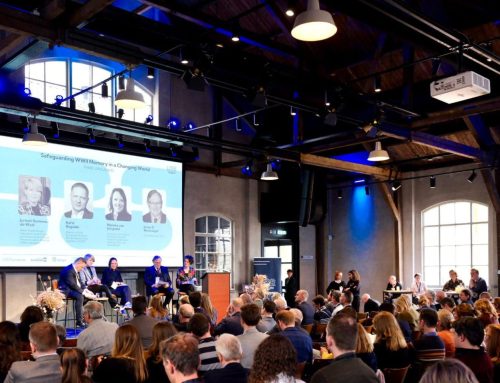
In this article dr. Bjorn Wansink (Utrecht University, the Netherlands) speaks with dr. Line Kuppens (University of Amsterdam, the Netherlands) and dr. Justin Sheria Nfundiko (Université Officielle de Bukavu and Université Catholique de Bukavu, Democratic Republic of Congo). Line and Justin authored the book Teaching About the Violent Past: Opportunities and Challenges for Teachers in Conflict-Affected African Societies, which was recently published open access. The book was officially launched in February 2026, in Amsterdam.
In the interview, Line and Justin share their main findings from Kenya, Côte d’Ivoire, and the Democratic Republic of Congo. As the interviewer, I found it inspiring to learn more about these three African countries and how teachers address violent pasts in their classrooms. The courage shown by many of these teachers in their local contexts may inspire European educators not to shy away from sensitive topics, but instead to engage with them in ways that contribute to peace around the world. But first who are Line Kuppens and Justin Sheria Nfundiko?
Dear Line, why are you interested in peace education?
I am an assistant professor at the University of Amsterdam, and I received my PhD in Leuven, Belgium. I also grew up in Belgium. As far back as I can remember, I have always had an inner curiosity about what drives people to develop very negative attitudes toward others. Why do we sometimes feel such hostility toward people who are different from us? From a young age, I was involved in projects that I would now describe as related to peace education.
When I began my PhD research in the context of Côte d’Ivoire, I saw how important teachers are in promoting peace. After the post-election violence in the country, teachers had to implement a new curriculum on citizenship and human rights education, but they faced many challenges. I realized that much of the existing research focusing on teachers was quite anecdotal, and I felt a strong desire to deepen our understanding of the experiences of teachers working under such difficult conditions.
And why are you interested in peace education, Justin?
I am a political scientist and sociologist based at the University of Bukavu and the Université Catholique de Bukavu. I also received my PhD at Leuven University. My interest is both academic and personal. I grew up – and still live – in a region marked by recurring conflict. In the DRC (Democratic Republic of Congo) the past is not something distant; it is lived every day. For me, teaching and researching the violent past is not about reopening wounds, but about understanding why this kind of violence persists in the countries we studied. It is also about exploring how education can serve as a tool for reconciliation and truly contribute to building peace and prevent the reproduction of conflict.
Justin, did you receive any peace education during secondary school?
I would say not at all. In our secondary school program (2004-2009), it felt as though teachers were avoiding discussions about the recent past. This created a gap between students, who wanted to learn about the violent history, and teachers, who did not address it. Young people will learn about the past anyway, if not in school, then elsewhere, often in problematic ways that fuel misunderstanding. That gap was an early and important motivation for me to begin this research.
Did you receive any formal peace education, Line?
The simple answer would be no. However, elements of peace education were included in some subjects. In Belgium, teachers have some freedom to make their own curricular choices, and some of them likely engaged more with societal issues and conflict than others. I was taught about the two World Wars and about colonialism, but not specifically about the case of Congo. Instead, we focused on Dutch colonialism. That said, this was a long time ago, and things may have changed since then.
What were the main questions you wanted to address in your book?
Line: We began with three major questions guiding our research. First, we wanted to find out, on a large scale, whether teachers address the violent past in their classrooms and whether distinct teacher profiles can be identified. Second, we aimed to understand why teachers hold different views about teaching the violent past. Third, we examined what kinds of training and support teachers need to feel confident and willing to teach this topic effectively.
Why did you select Kenya, Côte d’Ivoire, and the Democratic Republic of Congo as case studies?
Justin: We chose these three countries because they differ significantly in their historical trajectories, levels of violence, and temporal distance from violent events. Kenya and Côte d’Ivoire both experienced electoral violence, but they were later able to establish a relatively stable peace. From a temporal perspective, the violence in Kenya is the most distant in the past. In contrast, eastern Democratic Republic of Congo is still experiencing ongoing conflict. Another important factor we considered was the intensity of violence. In Kenya, the violence was primarily linked to elections. In Côte d’Ivoire, post-election violence emerged as a civil war ended. In the DRC, however, the violence is the most intense and ongoing. There is therefore a clear increase in conflict intensity from Kenya to the DRC. These three countries allowed us to examine how different contexts shape experiences of violence and how these contexts influence teachers’ willingness to address the violent past in the classroom.
What do you think European teachers need to know about the African context of these three countries to understand your findings?
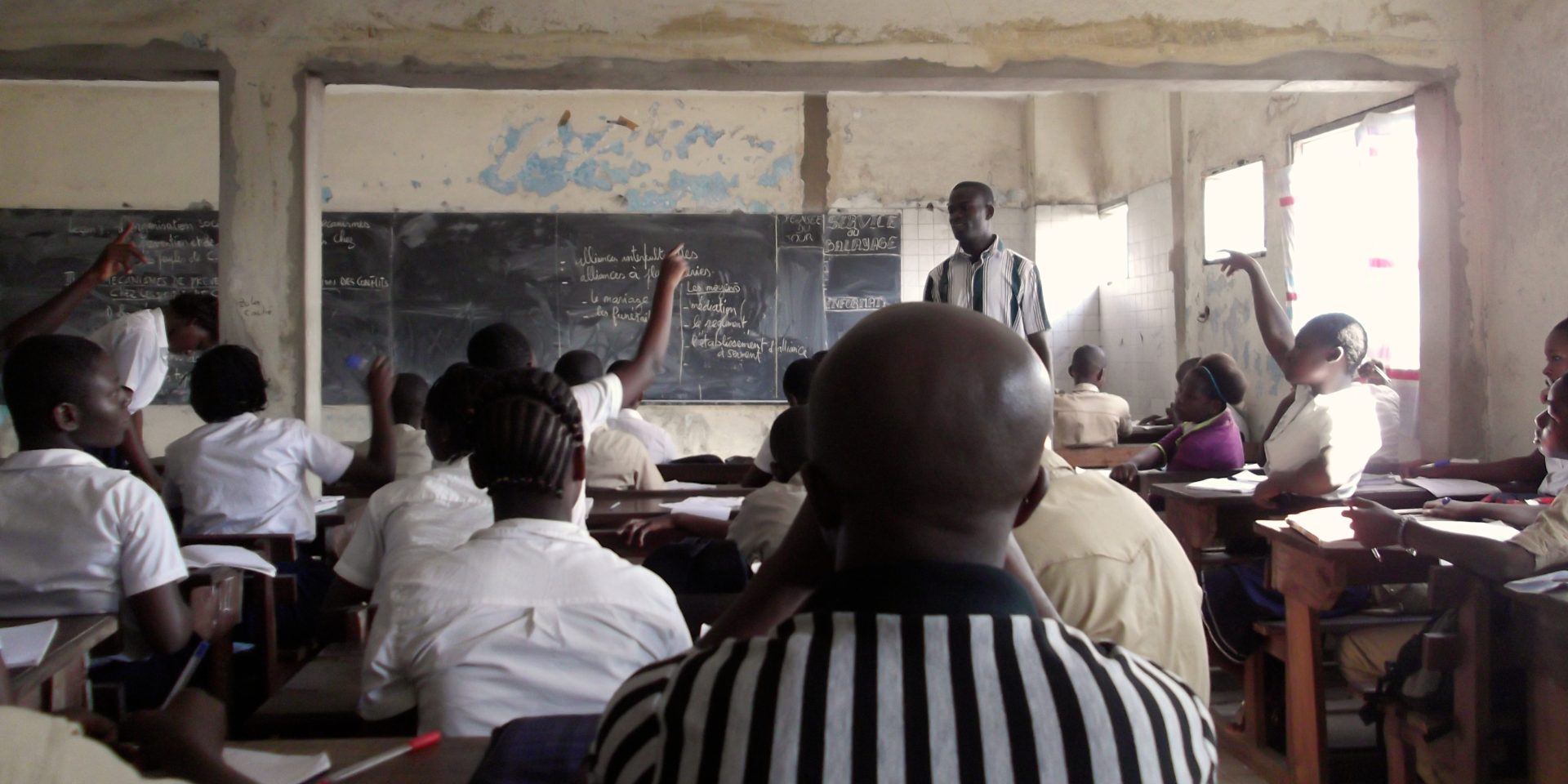
Line: I think the first thing to mention is the diversity within these countries. There are elite schools where the differences compared to the European context are minimal. For example, class sizes range from 20 to 30 students, all necessary materials are available, and teachers have permanent contracts. However, there is also a wide spectrum of other schools. Some have very poor infrastructure: classrooms may be overcrowded, without windows (so street noise is a constant issue), textbooks may be lacking, and teachers often have additional jobs alongside teaching. Students in these schools also face many challenges, such as difficulties attending school regularly, which increases the risk of dropouts.
Justin: I think the most significant difference is the teachers’ proximity to conflict. We are studying a context in which teachers themselves are victims. They must decide how to manage their own emotions and how to address the political risks involved in teaching about a violent past. Teachers fear for their personal safety, for example they may worry about arrest. In most of Europe, conflicts occurred long ago (with exceptions as Northern Ireland, the Balkans, and Ukraine). European teachers also generally have access to more support and training on addressing violent history. So, to understand the findings we produced, it is crucial to consider teachers’ realities, including experiences of trauma and political pressure.
In your book you distinguish direct and in-direct peace education, what do you mean with that?
Line: What both approaches share is the focus on peace and education. Both aim to contribute to a more peaceful society through educational practices. The key difference lies in their relationship to a community’s own conflict dynamics.
Direct peace education addresses the core of one’s own conflict. It focuses on conflicts that have occurred in one’s own country rather than using examples from elsewhere. By doing so, it helps foster a deeper understanding of the causes of conflict; examining what happened, the different perspectives on events, and also questions of responsibility. The goal is to change attitudes toward the “other,” whether that involves one or multiple groups, challenge stereotypes, and correct biased interpretations of the past. Ultimately, this approach promotes reconciliation and contributes to lasting peace.
Indirect peace education, on the other hand, does not engage directly with the community’s or country’s own conflicts. Instead, it focuses more broadly on promoting peaceful and non-violent behavior. This approach can take many forms, and in our book, we relate it to other educational approaches such as multicultural education, citizenship education, and human rights education.
Justin, do you think it is possible to engage in direct peace education when a country is at war, such as in the DRC?
Justin: I think this is a very difficult question at the moment (cf. the re-emergence of rebel group M23 having taken over large cities in Eastern DRC such as Goma and Bukavu). Based on my experience, teachers can face political pressure, which makes it challenging to address the direct causes of the conflict. On the other hand, students are living in an environment of conflict. They follow the news through a variety of media, experience violence firsthand, and are informed through social media. While it is difficult to address such topics directly, the context almost demands it. Teachers often feel a responsibility to respond to questions from students about these issues. Our upcoming research aims to explore how teachers can approach teaching about violence in this context. But honestly, based on my experience, it is quite challenging for teachers to discuss what is currently happening. The political pressure and constraints are still around.
In your book, inspired by Kitson and McCully (2005), you distinguish different profiles of teachers when addressing the violent past, can you explain these?
Line: We came up with three dimensions. The first one, we called the social utility of education. It means to what extent do teachers think it is actually the role of education to contribute to peacebuilding. The second dimension concerns comfort and discomfort: that is, how at ease teachers feel when teaching about the violent past. For example do they fear for hot moments in the classroom, but also do they fear political consequences. The third dimension is about teachers competencies and we make a distinction between their knowledge about past conflicts and their pedagogical skills. Based on these dimensions we came up with a total of five teaching profiles. First of all, those teachers who are avoiding. These are teachers who believe that education shouldn’t play a role in peacebuilding. Second, teachers doing the job. These are teachers who may not see peacebuilding as necessary but will follow the curriculum requirements and teach it if asked. Third, we have the containers. Those are teachers who do believe that it’s important for education to contribute to peace in society, but nevertheless feel a lot of discomfort in teaching about it. Fourth, risk takers, those are teachers that are not stopped by any feelings of discomfort. However, they do not have the competencies to do it (which they are themselves not necessarily aware of). Fifth, are the critical design experts who are convinced that education should contribute to peace building and also have the competencies to do this in a constructive way.
Can you tell us about the results of your research? What do teachers in these three African countries do?
Justin: I would like to highlight three main findings. First, we observed a very high level of support among teachers for the principles of peace education, both direct and indirect. However, some teachers felt unprepared and believed they lacked the capacity to address issues of direct peace education effectively. Second, we also found that teachers’ attitudes vary depending on the context, their political interest and their exposure to violence. Third, institutional support is crucial. When principals and other stakeholders support teachers, they are more willing and able to engage in teaching about the violent past. Providing teachers with relevant pedagogical materials is also important in supporting teachers to teach critically about the history of the violent past in their classrooms, as our experiences in DRC show.
I understand, but in countries that have recently experienced conflict, institutional support is often lacking, in my experience. What do you think, Justin?
Justin: I would like to emphasize two points. Based on my experience, schools often avoid direct engagement with these topics because they fear how education authorities will respond. For example, in the DRC, individuals who were involved in the conflict still hold important political positions, which can undermine institutional support. Secondly, teachers are concerned about final state examinations, for example in subjects such as history and civic education. They want their students to achieve good results and therefore focus on the official curriculum. As a result, they might feel they do not have time for peace education.
Are there any striking differences between the countries that you would like to highlight?
Line: The most striking difference, in my view, is between Kenya and the DRCon the one hand, and Côte d’Ivoire on the other. In Kenya and the DRC, there is significant support among teachers for introducing teaching about the violent past through direct peace education, even at the primary school level. In contrast, in Côte d’Ivoire, a majority of teachers only support this approach at the upper secondary level. In our book, we reflect on possible explanations for these differences. In the case of Kenya, we argue that the conflict may be considered somewhat less sensitive because the intensity of violence was lower.
Justin: In the DRC, teachers were often more willing to address the conflict, despite the higher risks, including the risk of arrest or even violence against them. The question is why teachers remain open to discussing conflict despite these dangers. I believe it is because the violence has been present for nearly 30 years and cannot simply be ignored. Teachers feel a responsibility to address it. However, more research is needed to fully understand the motivations of teachers in the DRC.
What can we in Europe learn from your research?
Line: Our findings offer hope. It is encouraging to see that teachers in the DRC, Kenya, and Côte d’Ivoire remain committed to teaching about the violent past despite many challenges. In Europe, we can learn from their motivation and their strong sense of responsibility regarding the role of teachers in society. In today’s Europe, we should not take democracy for granted. Teachers who are committed to democracy and peace can and should play an essential role.
Justin: We can also learn that silence is not an option. It is important to address controversial issues that may arise in the classroom, whether in Africa or in Europe. Teachers need to learn how to facilitate and mediate difficult conversations effectively.
Do you have any practical tips for teachers?
Justin: Teachers can begin with students’ questions and experiences. In our book, we show that conflicts always involve multiple perspectives, and these perspectives should be explored together in the classroom. It is also important to create emotional safety. Teachers should receive training on how to discuss controversial issues while taking emotions into account.
Line: I would add that our teacher profiles can serve as a useful framework for self-reflection. Before addressing controversial issues, teachers should ask themselves: What is the goal of education? Do I feel comfortable with this topic? What am I afraid of? If emotions arise, do I know how to respond? Reflecting on these questions beforehand can help teachers navigate the challenges that may arise. Ultimately, becoming what we call a “critical design expert” requires practice, classroom experience, and training. However, self-reflection is an important first step.
What gives you hope in relation to your research?
Line: What gives me hope is that many teachers believe in the social value of education. Whether they teach history or mathematics, a majority believe that education should contribute to peace. A significant proportion, between 60% and 80% depending on the educational level, also support teaching about the violent past. This is particularly remarkable given the security situation in the DRC and the practical challenges teachers face, such as teachers holding multiple jobs in Côte d’Ivoire.
Justin: What gives me hope is the commitment of teachers and students. Even under extremely difficult conditions, teachers are willing to reflect on the history of conflict. If they are well prepared, properly trained, and supported, they can make an even greater positive impact. We hope that policymakers, NGOs, universities, and donors will take our findings seriously and invest more in initiatives that support teaching about the violent past in these three countries.
Final words from Bjorn
Bjorn: For those interested in exploring Line and Justin’s research further, their book is open access and available online. Over the years, I have learned that despite differences in context, teachers around the world share many similarities. They play a crucial role in building peace and breaking cycles of violence. We must support one another and stand up for fundamental human rights worldwide. We can learn from the courage of these African teachers who address difficult topics under extremely challenging circumstances. I hope Justin’s call will be heard and that teachers in Europe and Africa can learn together how to work toward a peaceful world in which every child is valued and can thrive, regardless of color or religion.
Short Biography
Bjorn Wansink is Associate Professor of Educational Sciences at Utrecht University in the Netherlands. His research focuses on civics and history education, multicultural education, critical thinking, sensitive topics, and peace education. He has worked as a teacher trainer for EuroClio in various post-conflict societies and is also an expert for TerInfo.
Line Kuppens is Assistant Professor of Conflict Studies at the Governance and Inclusive Development Programme Group (GID) of the University of Amsterdam. Her research focuses on the role of education in promoting reconciliation in conflict-affected societies and on teaching about difficult histories more generally. She also conducts research on the intergenerational transmission of collective memories of violence and on youth aspirations in conflict-affected societies.
Justin Sheria Nfundiko is Associate Professor of Social Sciences at Univerrsité Officielle de Bukavu and Université Catholique de Bukavu. He serves as Co-chair of the Centre for Research and Studies on Peace and Conflicts in the Great Lakes Region at the Université Officielle de Bukavu. His research interest focuses on the reintegration of former child soldiers and structural inequalities within education systems, with particular attention to post-conflict and fragile contexts.