

Webinar: Teaching the Nakba
February 10 @ 4:30 pm - 5:30 pm
In this webinar, we will explore various primary and secondary sources that help to tell the story of the 1948 Nakba, a story often hidden in history textbooks. Key players in the story include the World Zionist Congress, Sami Hadawi, Elias Kousa, Father Ralph Gorman, and many more. Teachers will be given access to and context for new sources not easily found online. The workshop will also feature interactive activities to give students a meaningful experience and understanding of the events of 1948.
The Nakba (the catastrophe) of 1948 Lesson Plan is a synthesis of primary sources and secondary sources aimed to provide teachers with a deep analysis of the connection between the Holocaust and the Nakba of 1948. The lesson grants agency and voice to the millions of Palestinians whose stories have not been exposed for various political reasons. It also seeks to amplify Jewish voices that do not subscribe to the Zionist national project, illustrating the diversity of perspectives within Judaism itself.
The purpose of this lesson plan is threefold:
- To illustrate the complexity of the building of the nation-state and its impact on local indigenous peoples. One particular example is the nation-state of Israel and its creation in 1948 as a result of the Zionist enterprise of realising a Jewish homeland in the land of Palestine. The lesson focuses on the impact of nation-state building and its exclusionary policies in the case of Israel, in creating a unique and exclusive Jewish homeland from its inception. The result is a complete dispossession and depopulation of an entire community who identify collectively as Palestinians. In this sense, students learn the benefits and dangers of nation-state building for the dispossessed.
- To understand how Palestinian identity has been preserved over the years, amidst very little understanding or education on the subject, and Jewish voices that support Palestinian grievances and seek peace and a solution to the conflict.
- To practice the power of history through storytelling via books, primary sources, films, and oral histories will bring this lesson to life for the students.
Objectives/Outcomes:
- Create empathy and compassion for victims of the Nakba.
- Integrate the stories and voices of Palestinians into the broader immigrant experience.
- Illustrate how one group’s oppression can be equally catastrophic as another group’s oppression.
- Delineate the difference between Jewish voices and Zionist voices when determining views on the Palestine question.
- Analyse how nation-state building can establish and implement exclusionary policies towards indigenous peoples.
- Examine stories and traumas of Nakba survivors through their own experience.
- Portray Palestinian voices as authentic, real, and worthy of learning in world history.
- Connect Jewish and Palestinian voices as part of a common thread for justice and peace in the Middle East.
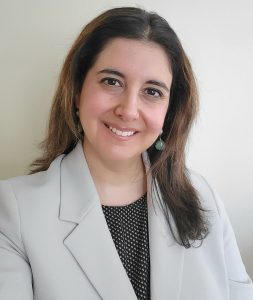
Our host will be Rania Assily, an assistant professor of history at Cuyahoga Community College in Northeast Ohio, United States. She teaches and develops curriculum for World Civilisations, U.S. History, and Middle East history. This lesson plan was developed and first featured in March 2025 at the All History is Local NCHE (National Council for History Education) Conference.