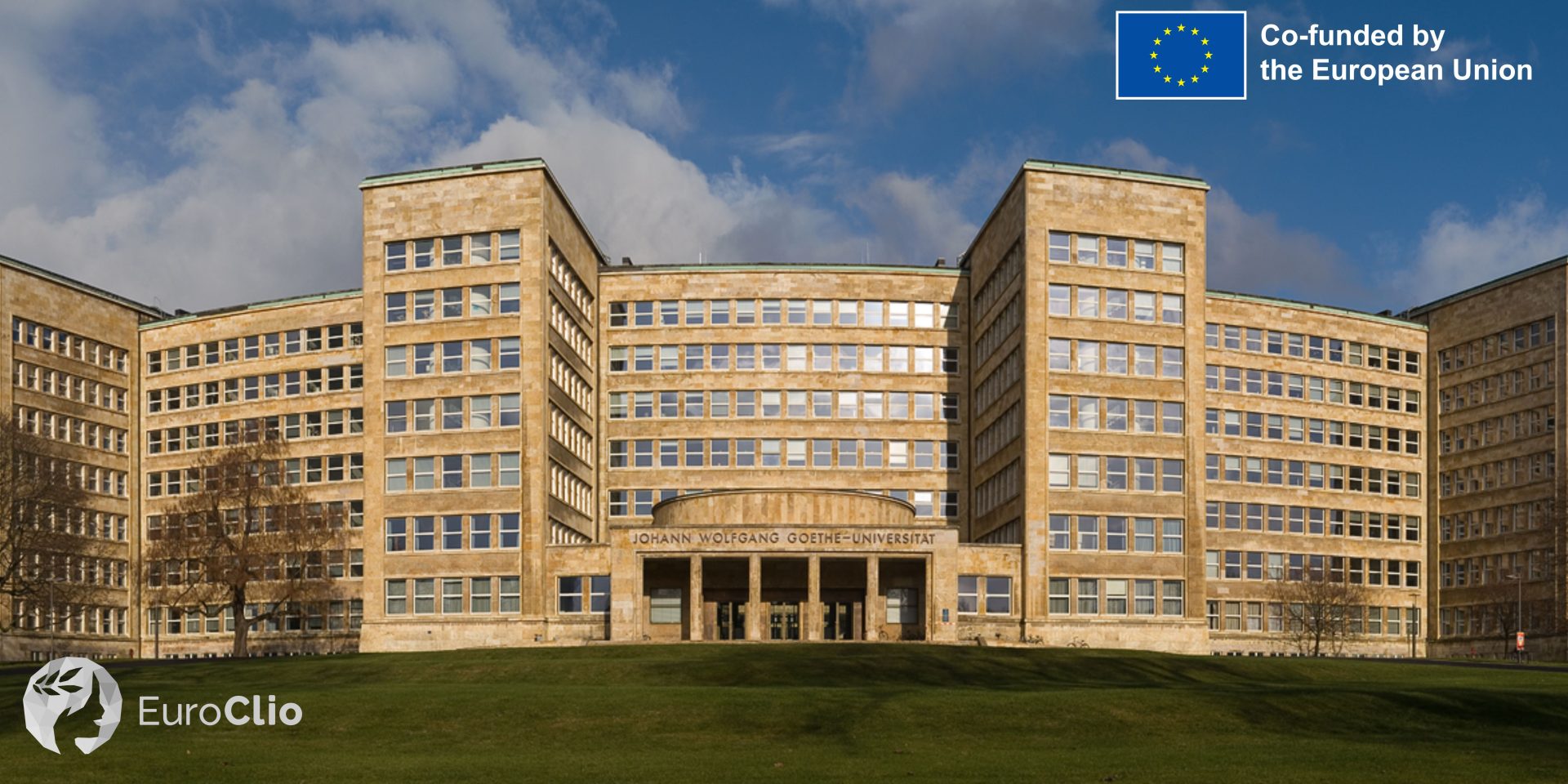
Image credit: IG Farben Building of the Goethe University Frankfurt. Photo by Jürgen Matern, Wikimedia Commons (CC BY-SA 2.5)
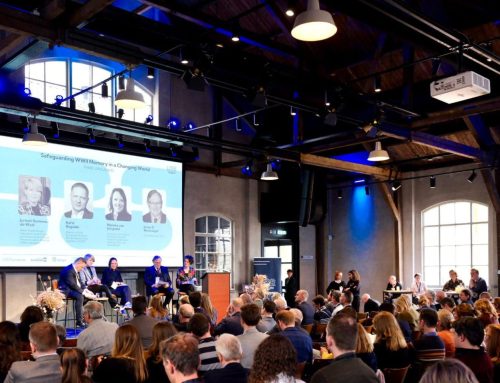
On 10 December, an International Research Workshop of the Facts Not Fiction project was held in Frankfurt am Main, organised in cooperation with the Fritz Bauer Institute and Goethe University Frankfurt. The workshop formed a key project activity combining research dissemination and capacity building. Participants included project partners, participating teachers, researchers, project advisors, and invited experts.
The Facts not Fiction project aims to educate European youth about the Holocaust and Nazi persecution by engaging in local research, accessing historical sources, and collaborating with institutions such as archives and museums. During the workshop, outcomes of students’ project work developed within the Facts Not Fiction project were presented. Teachers participating in the project, including educators from Finland and Germany, took part in the programme.
A central element of the day was the presentation of the research design, methodology, and comparative findings by a team of researchers led by Rodoljub Jovanović, whose research constitutes an integral part of the project. The presentation highlighted results from Germany (by Jan-Christian Wilkening), Romania (Leyla Safta-Zecheria), Finland (Tanja Kohvakka), and Serbia (Aleksandar Milovanović), based on focus groups and interviews with students and educators.
Following the presentation, an expert debate was organised as a structured dialogue between researchers and practitioners. The discussion focused on challenges and opportunities in connecting academic research with educational practice and explored ways to strengthen cooperation between these fields, recognising their interdependence for achieving sustainable educational impact.
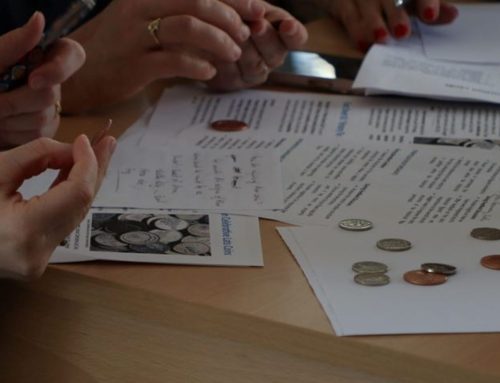
The programme further included two capacity-building workshops. The first, Creative Tools for Teaching: Methods and Approaches, was organised by the Arolsen Archives and focused on innovative pedagogical tools and approaches to teaching difficult history. The second workshop was based on educational materials developed by students participating in the project and presented concrete examples of learner-centred, project-based approaches.
The day concluded with a guided visit of the IG Farben building hosting the event and the Norbert Wollheim Memorial, supporting contextual learning and reflection, followed by a joint dinner.
The public event on 10 December was preceded and succeeded by internal project meetings among the Facts not Fiction team representing Terraforming, Arolsen Archives and the Intercultural Institute of Timisoara.